

About this worksheet
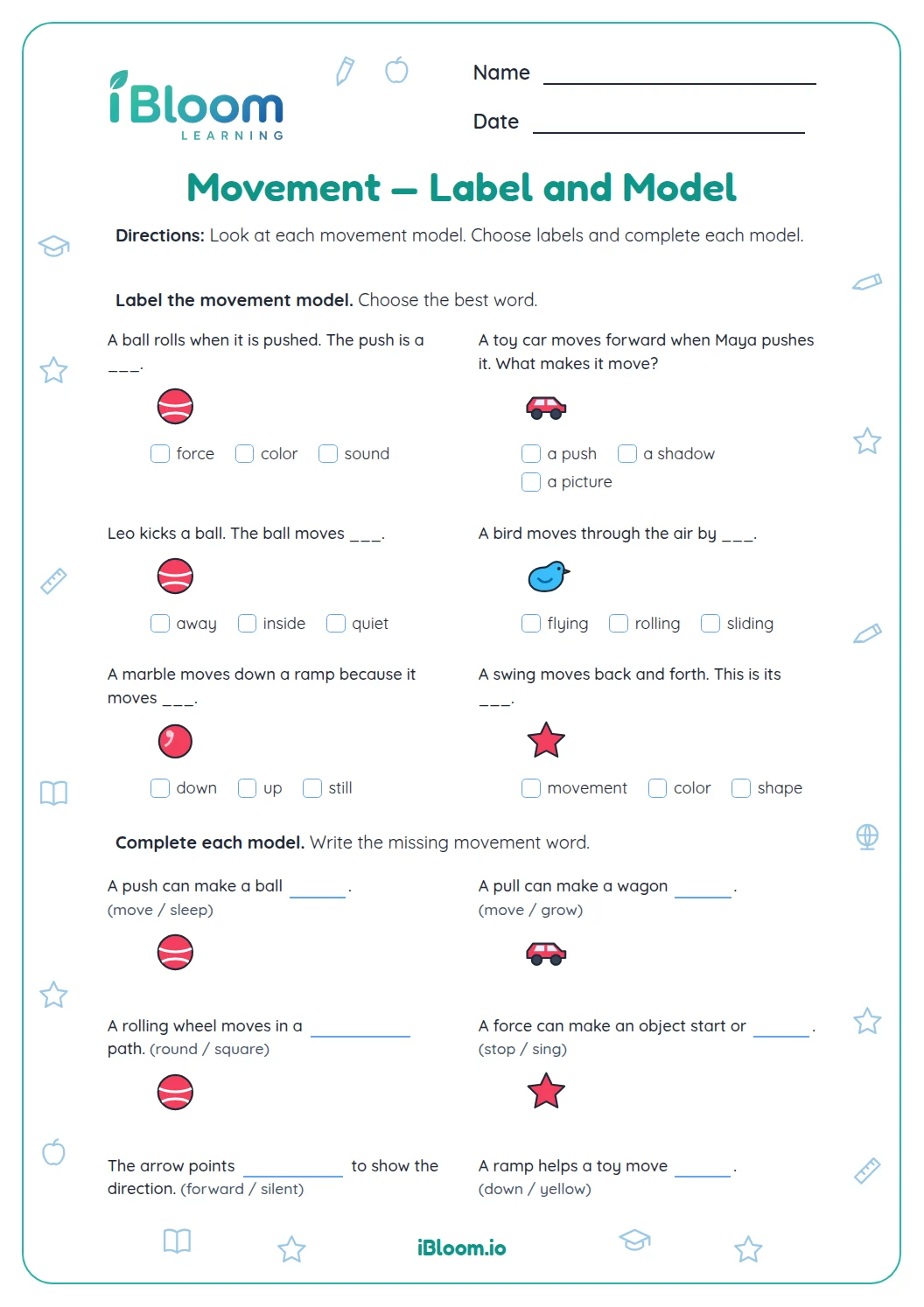
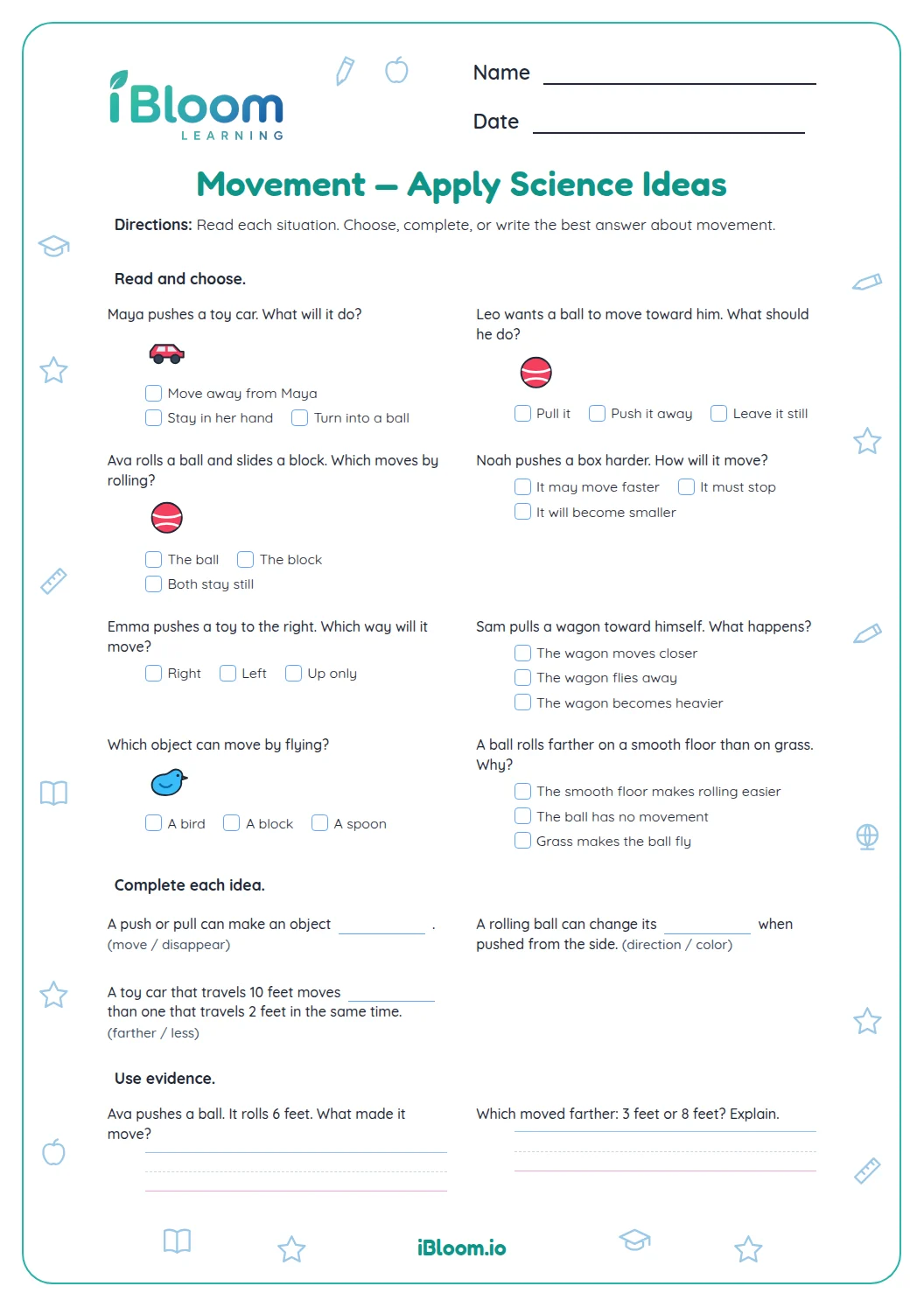
This Grade 1 science worksheet uses familiar actions to help children identify pushes and pulls and notice how objects move. Fourteen multiple-choice questions cover everyday forces, a ramp and lever, direction, and changes in motion. The answer key marks each choice.
How can children tell a push from a pull?
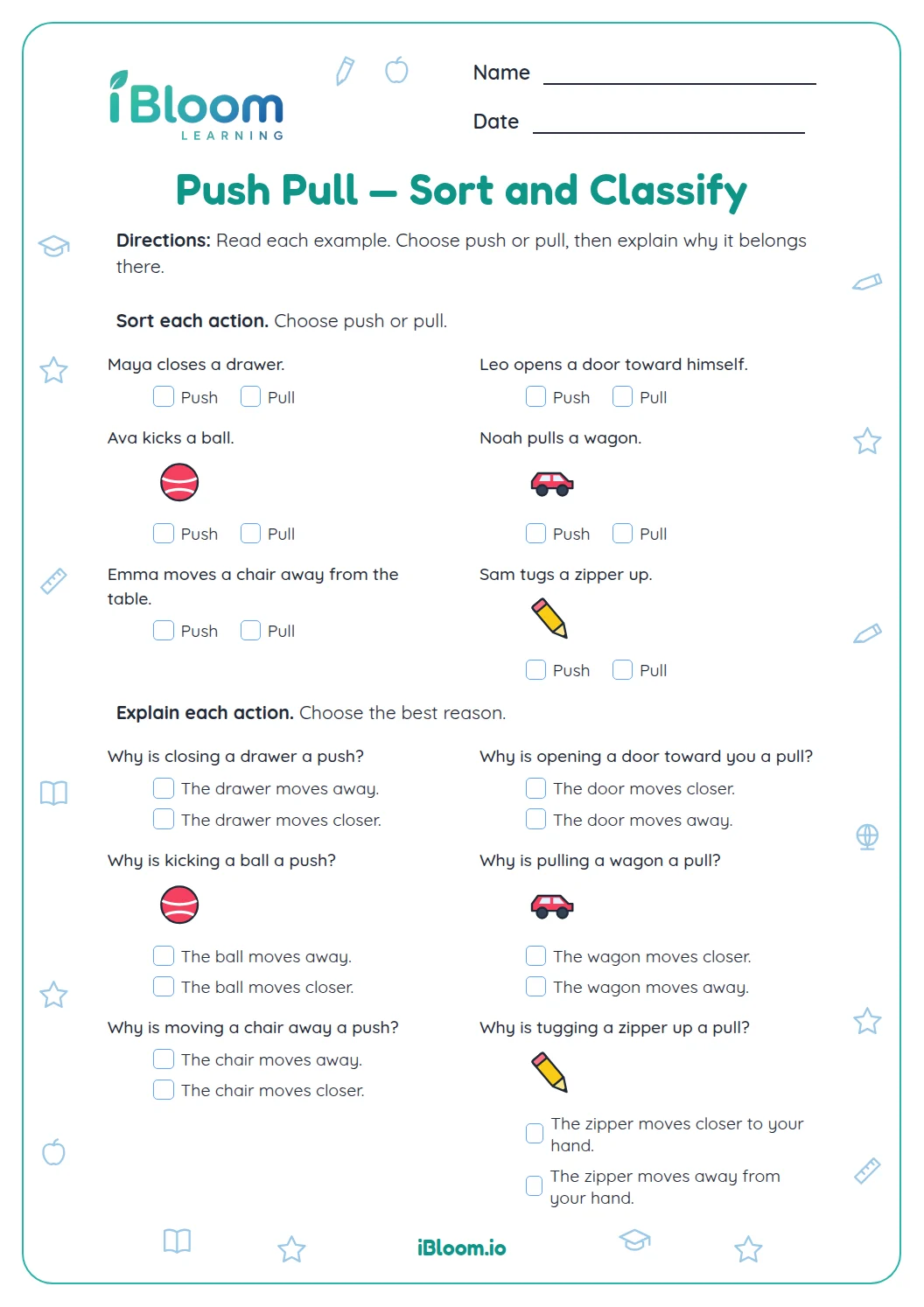
A push moves an object away from the person or thing applying the force. A pull brings it closer. The same object can be pushed or pulled in different situations, so look at the action and direction.
- 1Pressing a door open is a push.
- 2Tugging a wagon toward yourself is a pull.
- 3The object’s direction helps name the force.
What can a force do to an object?
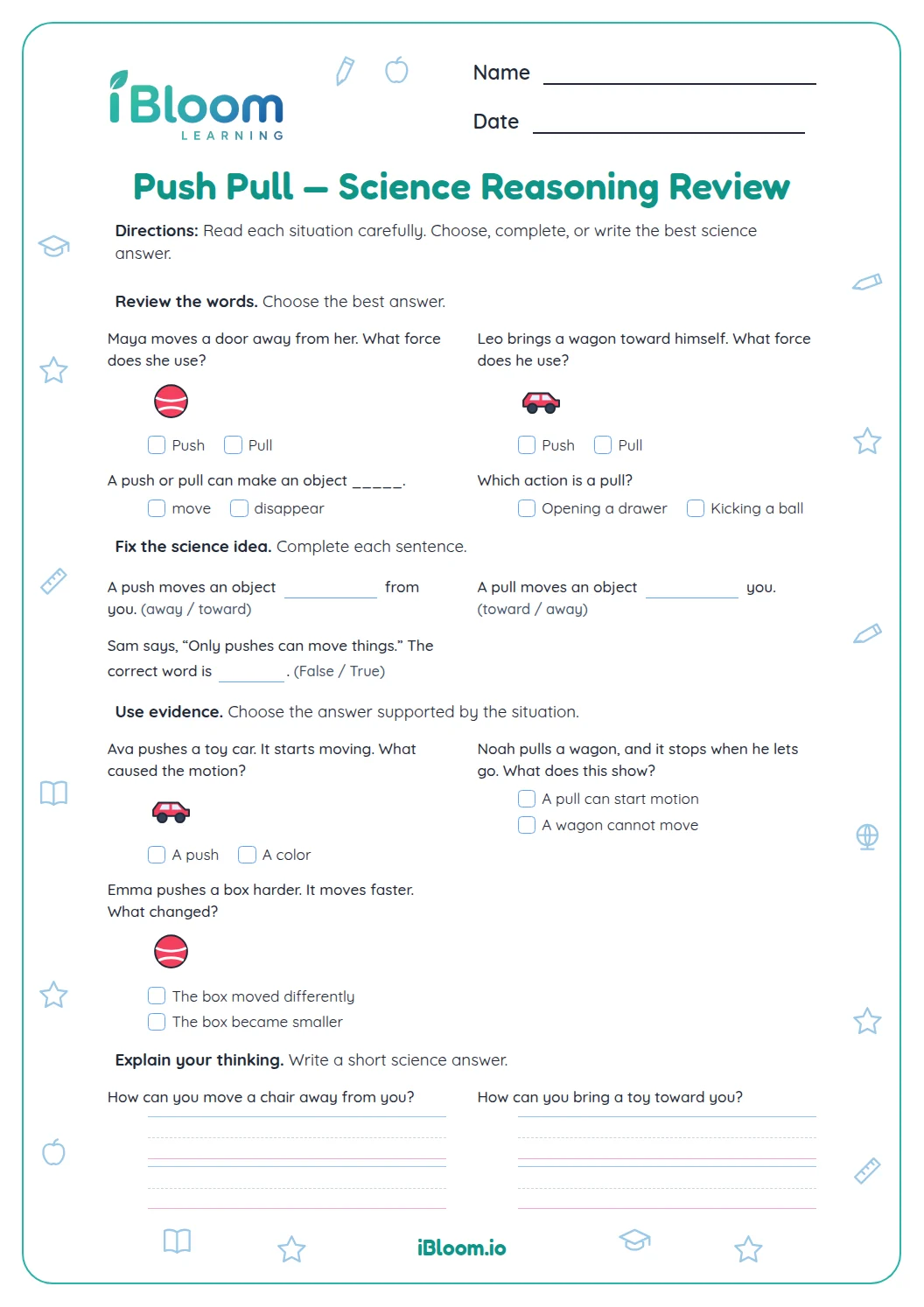
A push or pull can start an object moving, slow it, stop it, or change its direction. Questions 5, 6, and 14 check these effects. Other items connect a familiar action with the way an object moves.
How can a simple machine help?
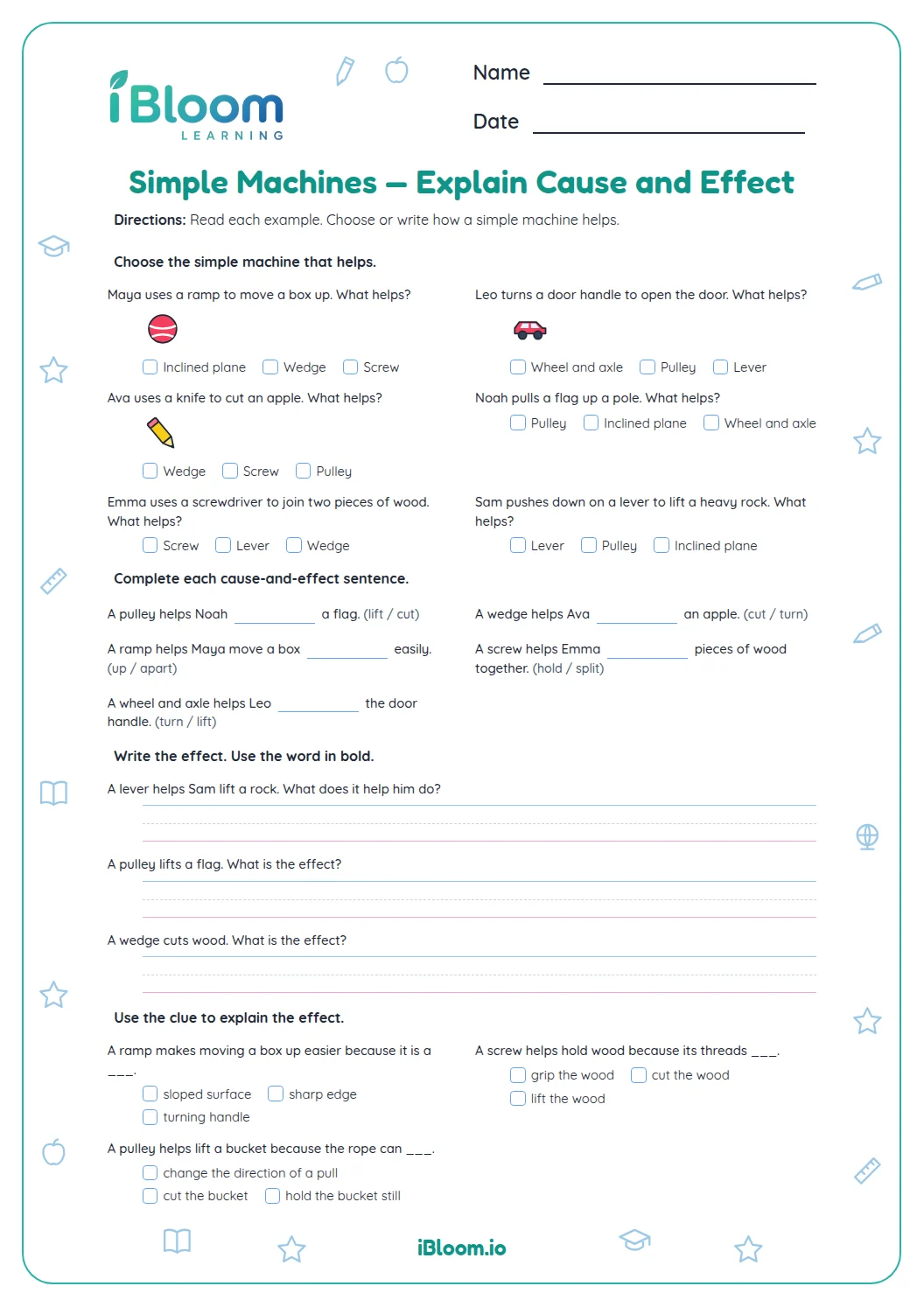
A ramp helps move a box to a higher level, and a seesaw turns around a middle support like a lever. Questions 7 and 8 connect these tools with simple machine ideas.
How to use this worksheet
- 1Read each action and identify the object being moved.
- 2Decide whether the action is a push or a pull.
- 3For direction questions, imagine where the object moves.
- 4For machine questions, match the tool with its familiar shape or action.
Mistakes to watch for
The mistake
Calling every force a push.
The fix
Check whether the object moves toward or away from the person.
The mistake
Mixing up the direction of a pull.
The fix
A pull brings the object closer to the person applying it.
The mistake
Calling the seesaw a pulley.
The fix
A seesaw turns around a middle support, like a lever.
What to practice next
Make more practice
Questions parents and teachers ask
How many questions are included?
There are 14 multiple-choice questions about pushes, pulls, direction, motion, and two simple machines. Children identify familiar actions and connect them with what happens to an object. The answer key gives the correct choice for each item, so adults can check the full set quickly.
What is the difference between a push and a pull?
A push moves an object away from the person or thing applying the force. A pull brings it closer. Pressing a door open is a push; tugging a wagon toward yourself is a pull. The worksheet uses everyday actions to practice this distinction.
What can a force do to an object?
A force can start an object moving, slow it, stop it, or change its direction. Several questions ask children to connect a force with motion, such as a ball slowing on grass. The answer choices help children identify which change the example describes.
Which simple machines appear on the worksheet?
The worksheet names a ramp and a lever. Children choose a ramp as a tool that helps move a box to a higher level, then connect a seesaw that turns around a middle support with a lever. The answer key marks both choices.
How should a child answer the direction questions?
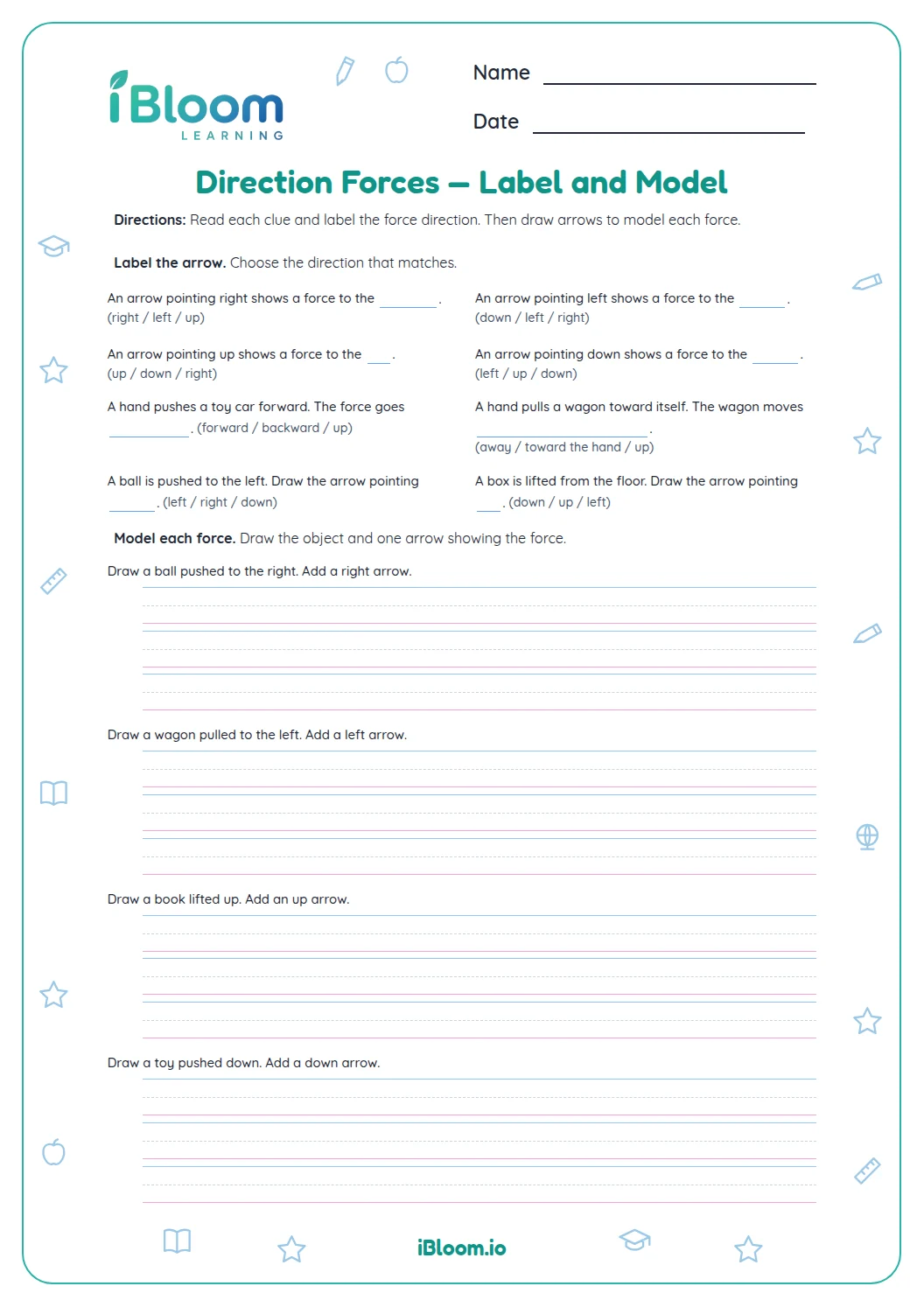
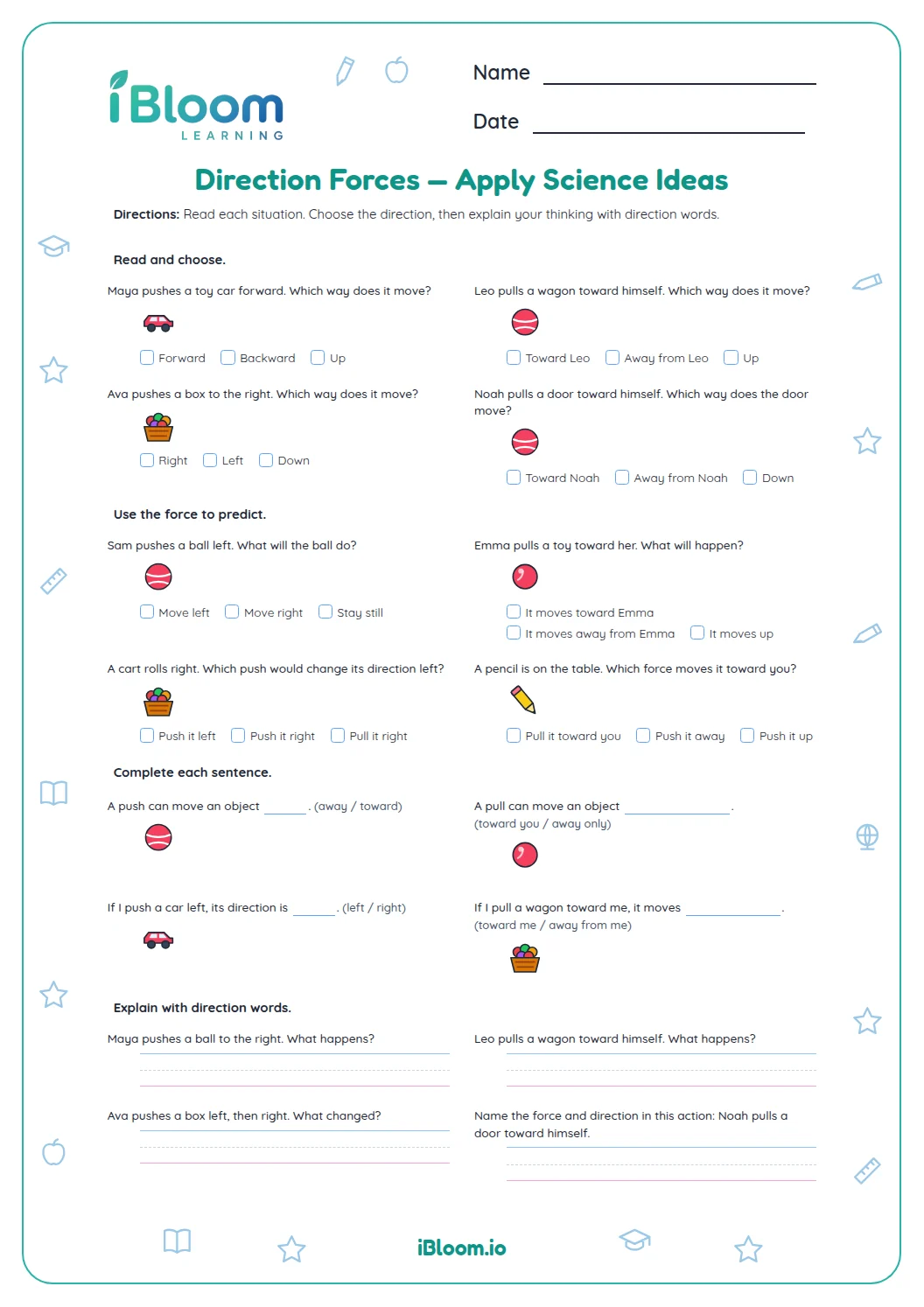
Think about where the object moves in relation to the person. A push usually sends an object away, while a pull brings it closer. Questions about a toy car and wagon use this relationship, and the answer key shows the intended direction.