

About this worksheet
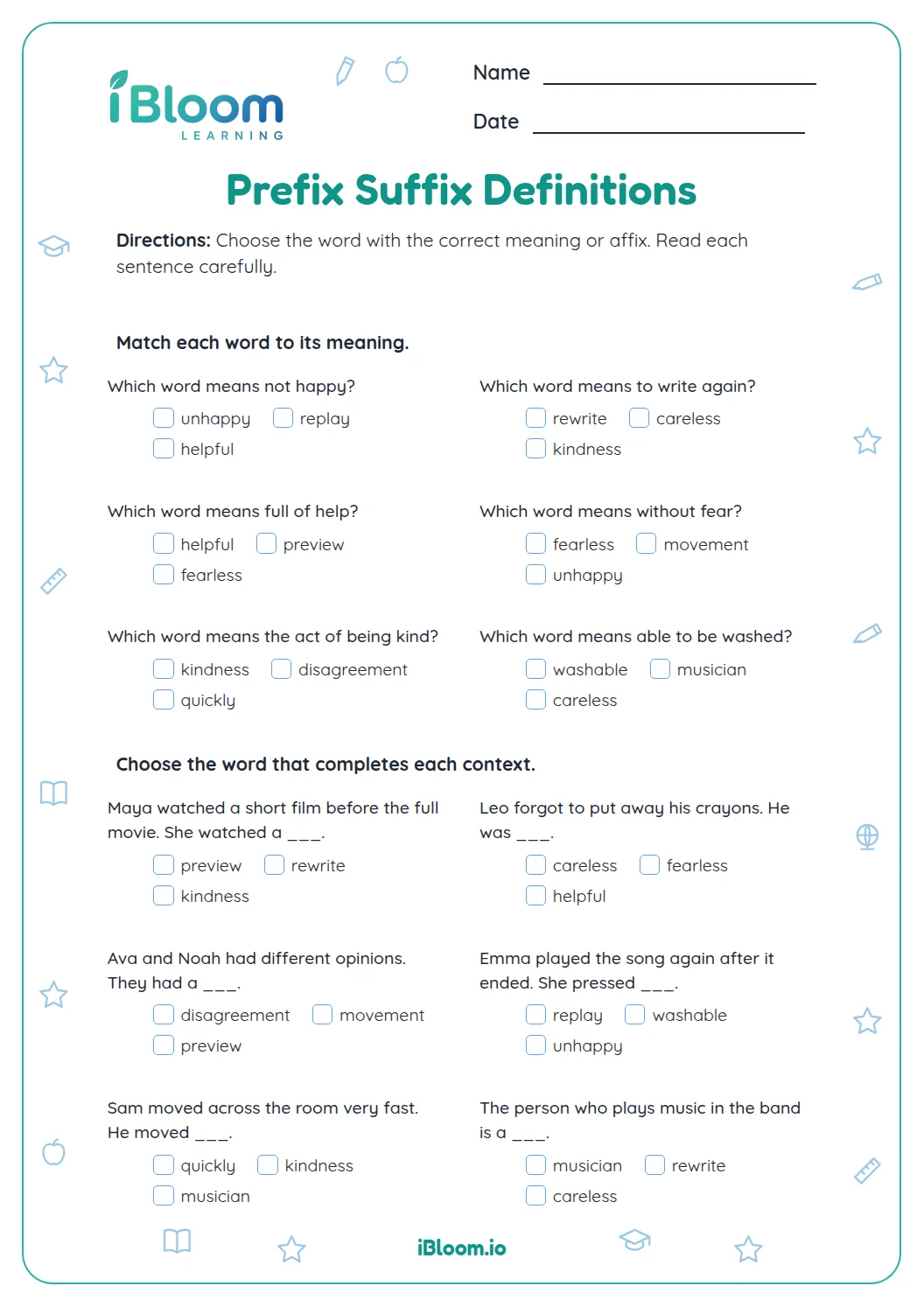
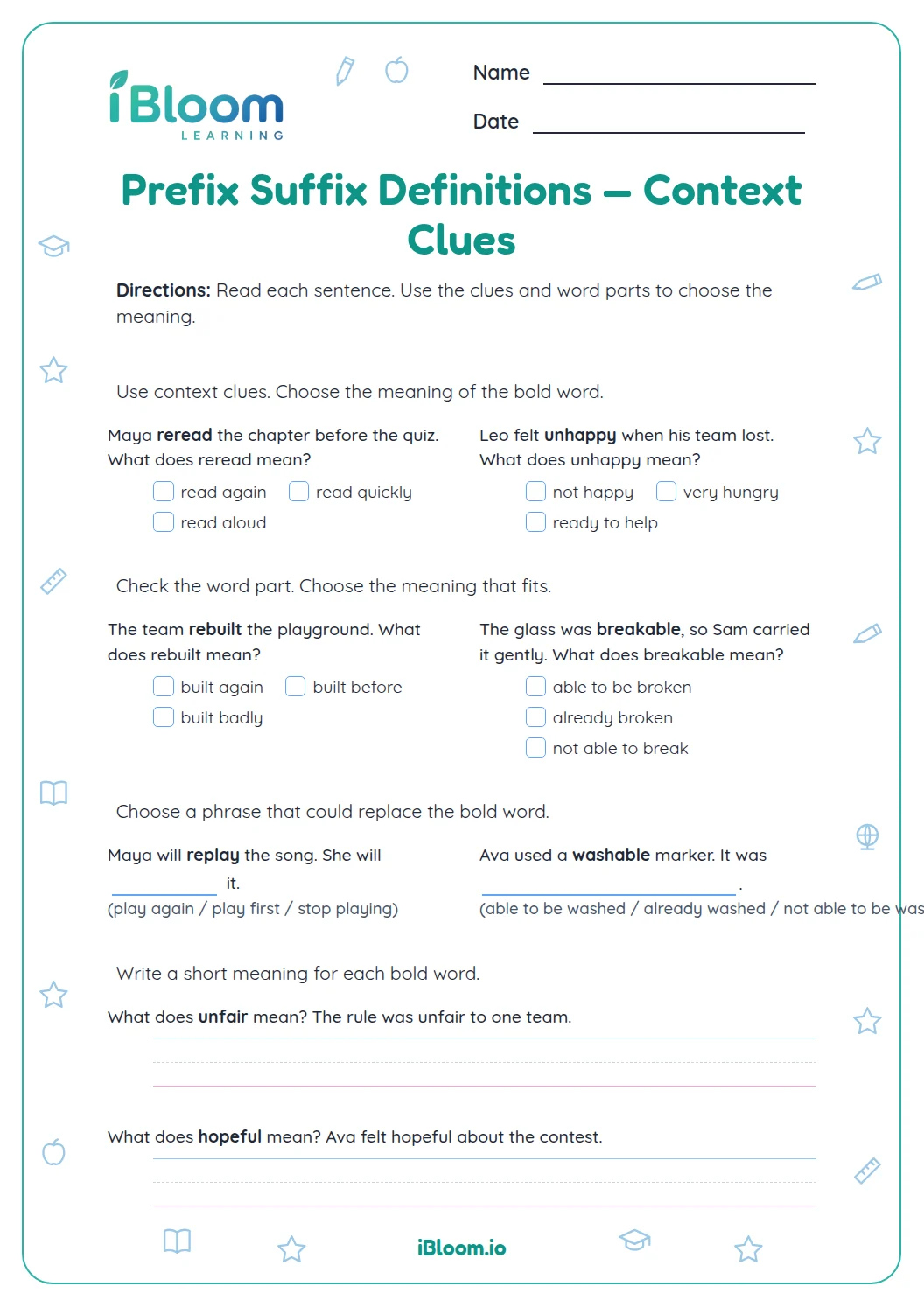
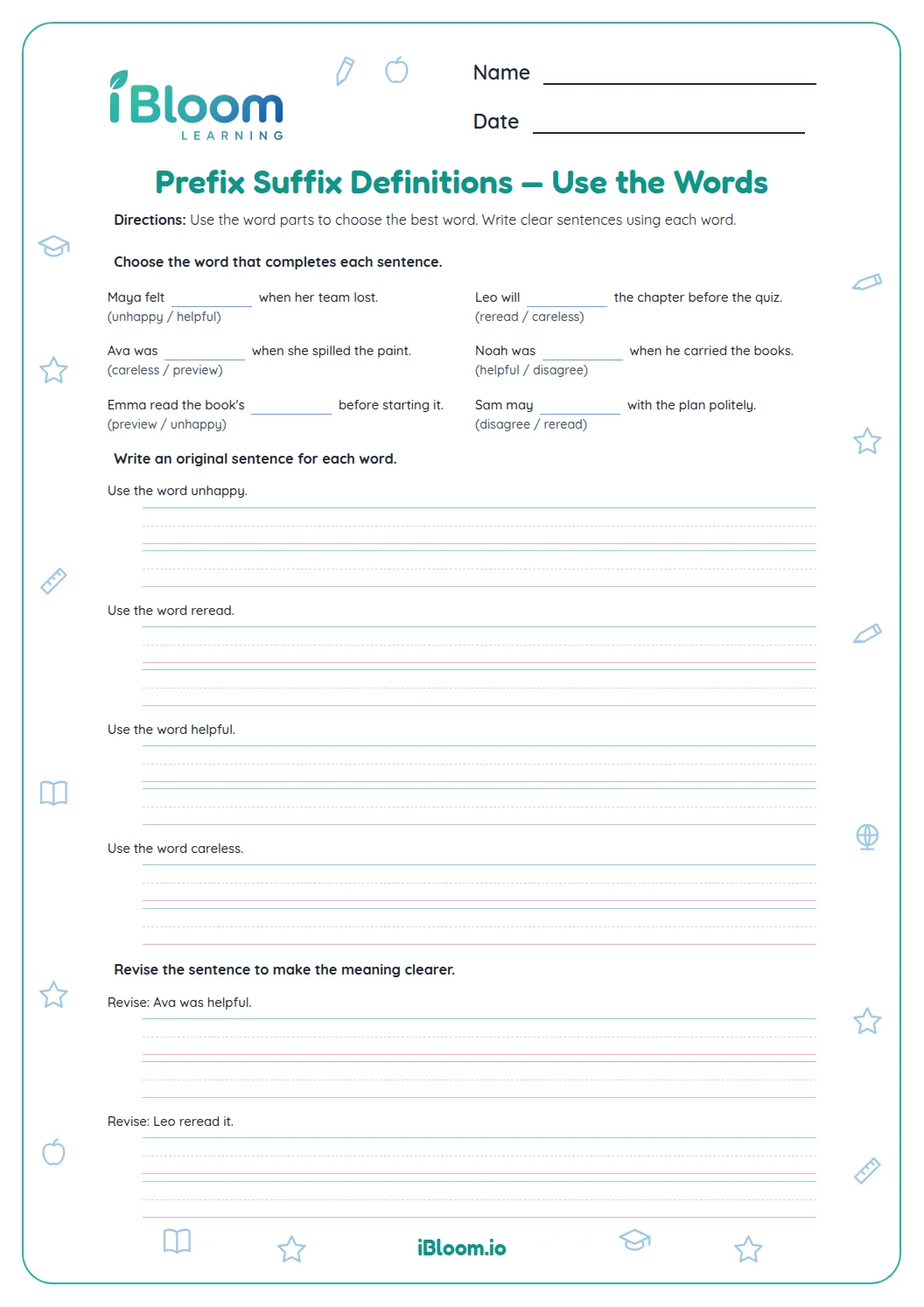
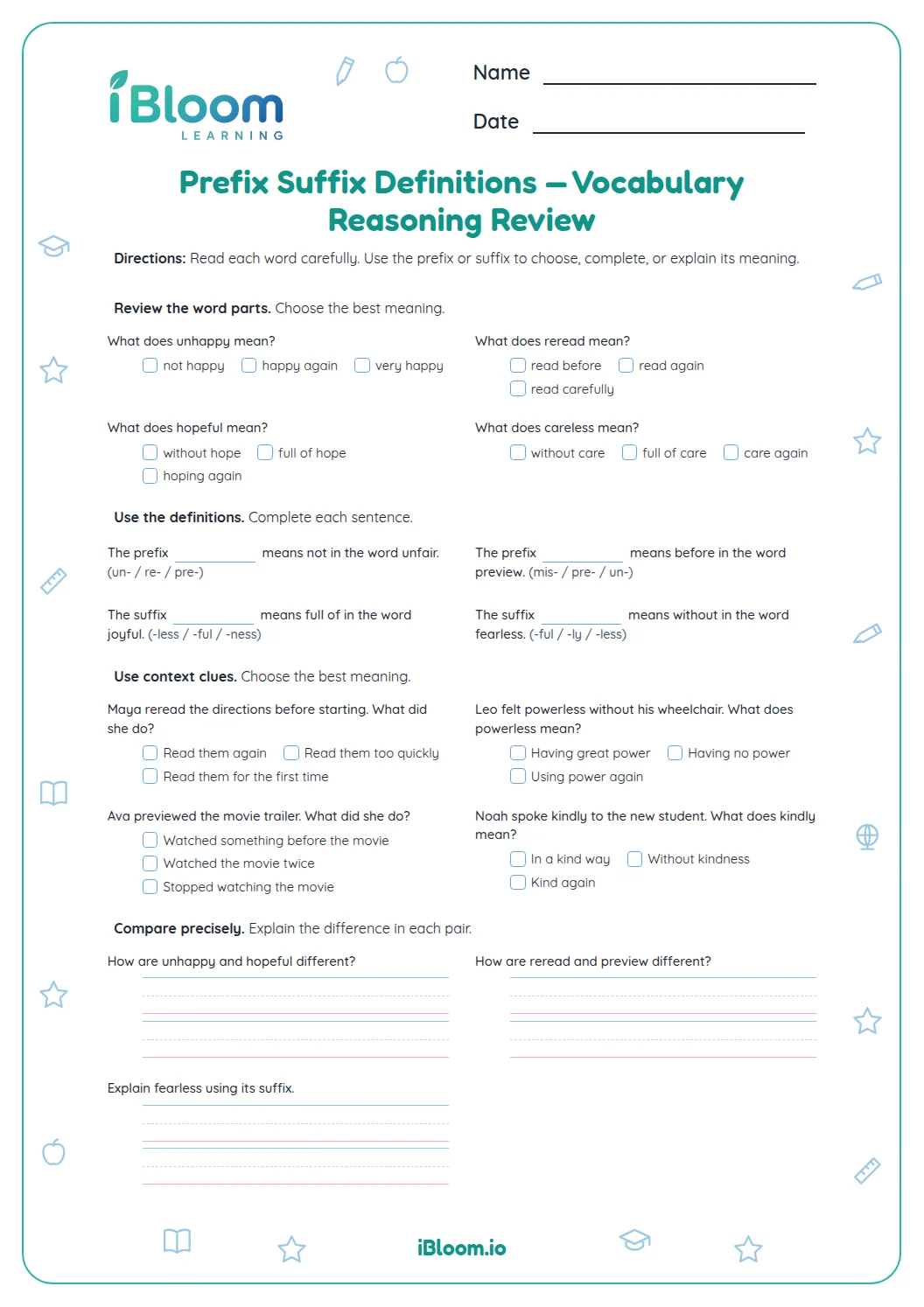
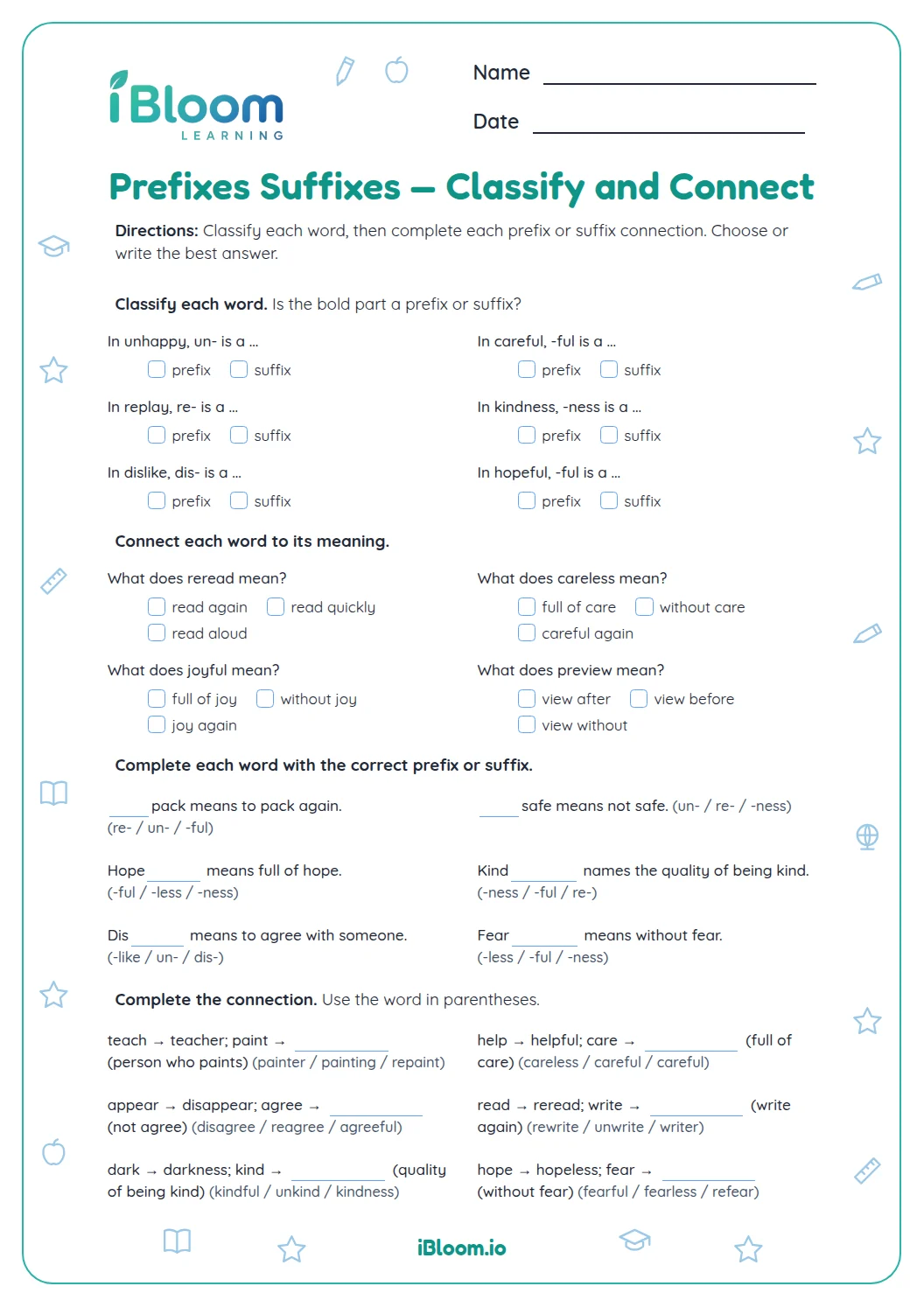
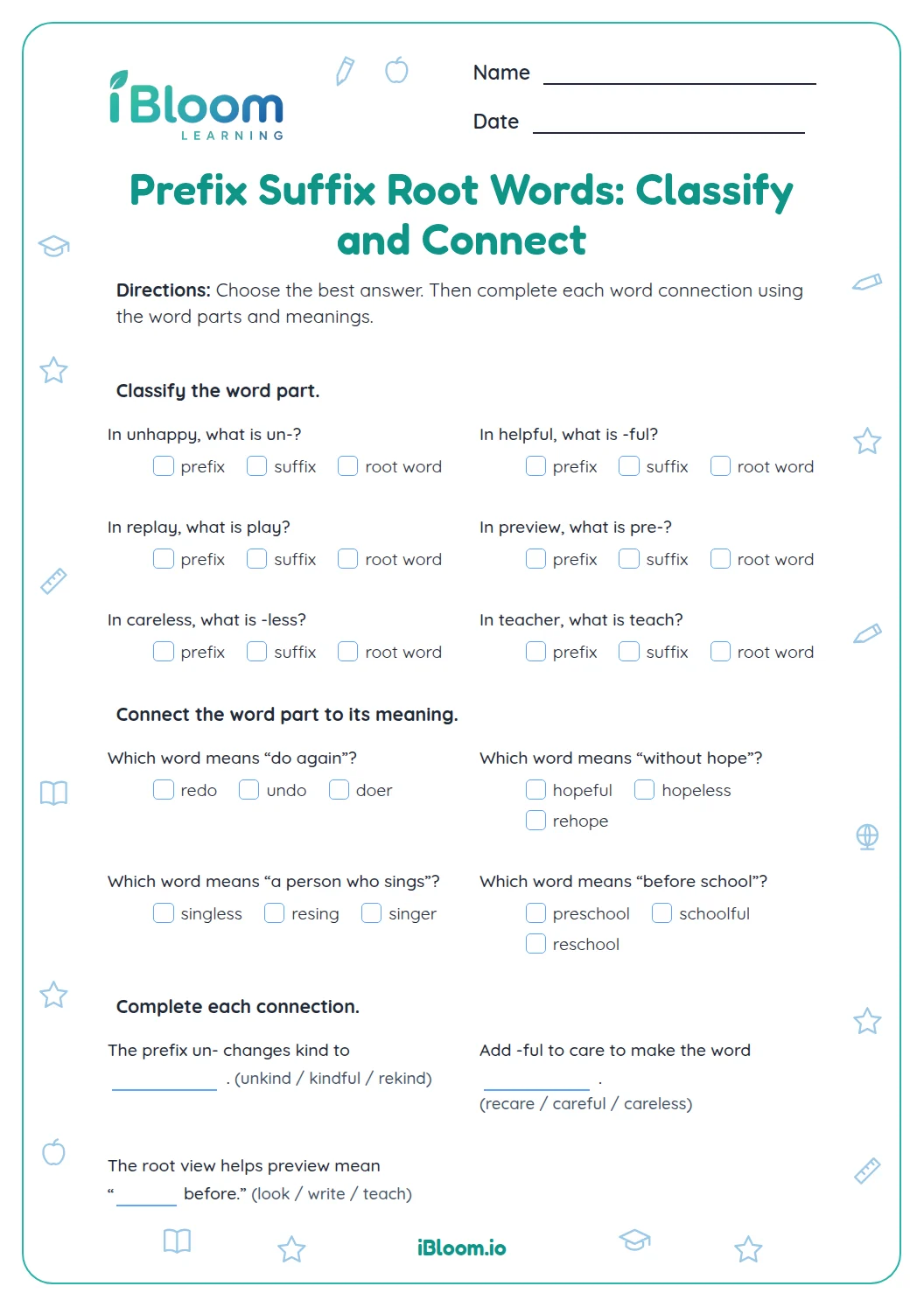
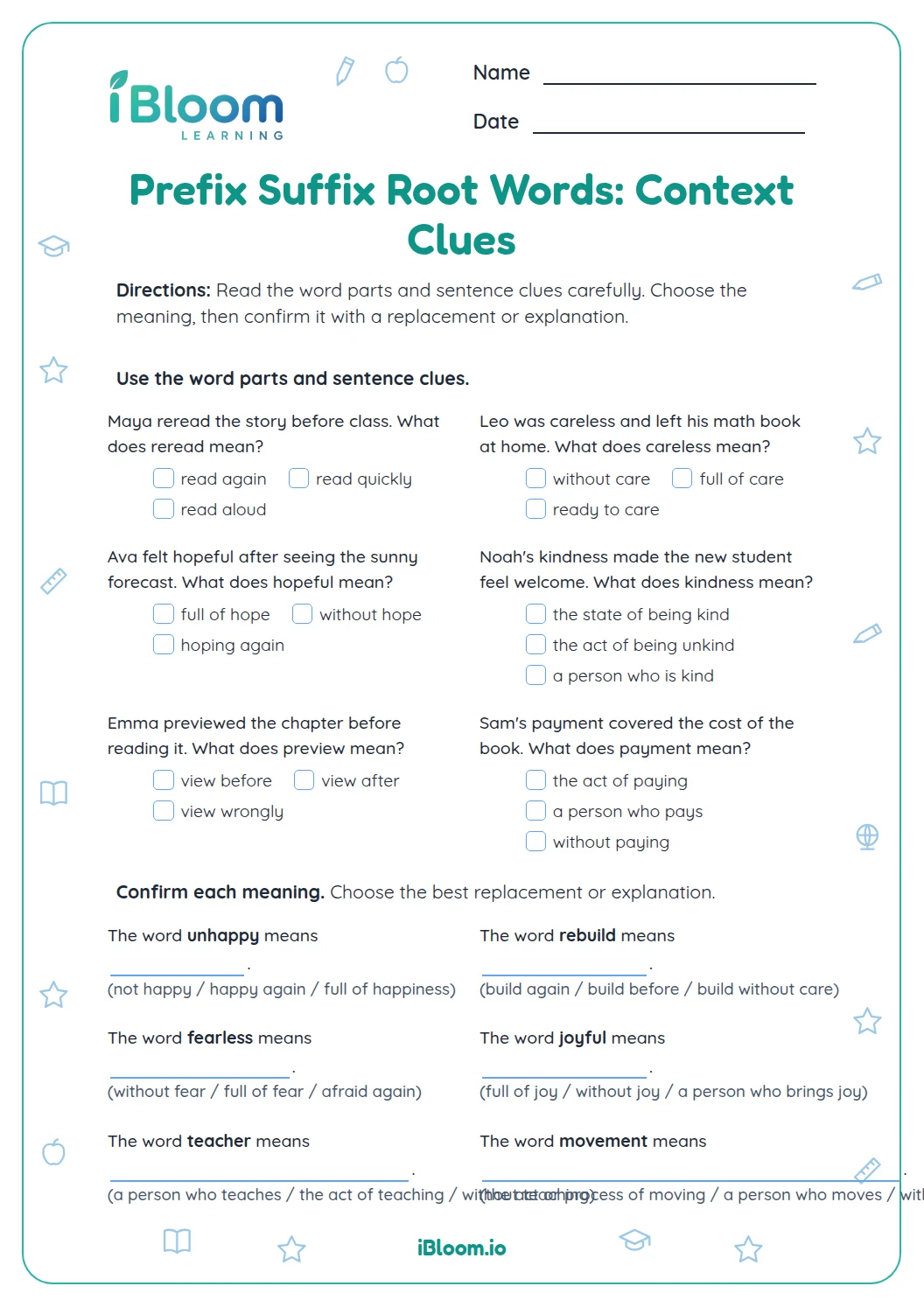
This free printable Grade 4 vocabulary worksheet turns affix definitions into a sequence of twelve choices. Part A asks students to classify a named word part as a prefix or suffix. Part B connects re-, pre-, dis- and -able to their meanings in familiar words. Part C uses those meanings, plus a supplied definition of -ist, to identify words such as reheat, prepay and artist. The practice supports Common Core L.4.4b, using grade-appropriate Greek and Latin affixes and roots as meaning clues. A separate answer key marks every correct choice for quick checking and discussion.
Aligned to L.4.4b
How can students tell a prefix from a suffix?
Look at where the affix joins the base. In repaint, re- comes before paint, so it is a prefix. In washable, -able comes after wash, so it is a suffix. The hyphen shows the side that attaches to the base.
Part A names the affix explicitly. Students can focus on its position without having to guess which letters they should inspect.
How does the same base help compare two prefixes?
Reheat and preheat share the base heat, but the prefixes give different meanings. Re- adds again, while pre- adds before. Question 9 asks students to connect “heat again” to reheat; preheat is a useful wrong choice because it requires checking the prefix carefully.
- 1Question 9: Which word means “heat again”?
- 2Base: heat. Prefix: re- means again.
- 3re- + heat → reheat: heat again.
How do students connect a suffix to a whole-word meaning?
Readable combines read with -able, meaning able to be. The whole word means able to be read. Artist combines art with -ist, a suffix used for a person who practices an activity.
Part C moves from knowing a definition to applying it. Encourage students to explain both pieces of a chosen word, rather than pointing only to the first letters or the ending.
How to use this worksheet
- 1Say repaint aloud and separate re- from paint.
- 2Complete the four prefix-or-suffix classifications in Part A.
- 3For each Part B word, name its base and try the affix meaning with it.
- 4Complete Part C, comparing words that share the same base.
- 5Check the key and explain one prefix word and one suffix word aloud.
Mistakes to notice and how to fix them
The mistake
Calling -able a prefix because it changes the meaning.
The fix
Both kinds change meaning; position distinguishes them. -able follows wash.
The mistake
Choosing preheat for “heat again.”
The fix
Pre- means before; re- supplies the meaning again.
The mistake
Choosing reader for “able to be read.”
The fix
Reader names a person or thing that reads; -able gives readable its meaning.
Common Core alignment
Use re-, pre-, dis-, -able and -ist to connect word parts to definitions.
On this sheet: Students classify affixes, identify their meanings and combine affix and base meanings to choose words.
Show the official wordingHide the official wording
Use common, grade-appropriate Greek and Latin affixes and roots as clues to the meaning of a word (e.g., telegraph, photograph, autograph).
What to practice next
Make more practice
Further reading
Questions parents and teachers ask
Which affixes are practiced on this worksheet?
The sheet uses re-, pre- and dis- as prefixes, and -able and -ist as suffixes. Students first classify word parts, then choose meanings, then identify whole words. Examples include refill, preheat, disagree, washable and artist, with twelve multiple-choice questions across three parts.
What do the hyphens in re- and -able show?
The hyphen marks where an affix attaches to another word part. In re-, it comes after the letters because re- joins before a base, as in repaint. In -able, it comes first because the suffix follows a base, as in washable.
How are reheat and preheat different?
Reheat means heat again, while preheat means heat before something else happens. Question 9 places both words among the choices so students must use the prefix meaning. Ask them to keep heat the same and explain what changes when re- becomes pre-.
Why does readable mean able to be read?
The suffix -able contributes the meaning able to be, and the base read tells what can be done. Students combine those parts to interpret readable. Comparing it with reader and reread in question 11 helps them notice that changing an affix changes the whole meaning.
How can I check understanding beyond the answer key?
Ask students to explain one choice by naming the affix, its position and its meaning. For prepay, they can say pre- is a prefix meaning before, so prepay means pay before. This short explanation shows how they connected the definition to the word they selected.