


About this worksheet
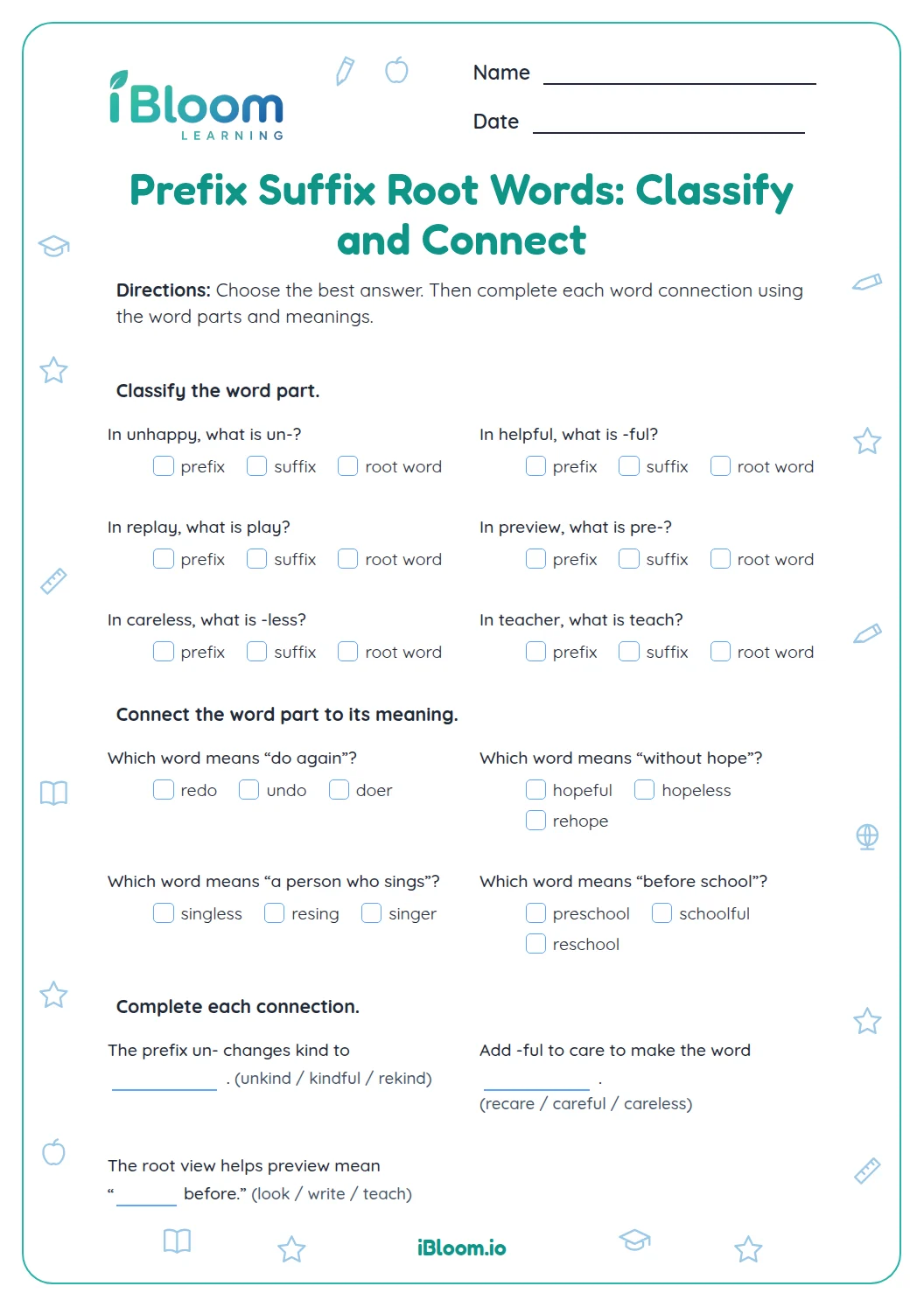
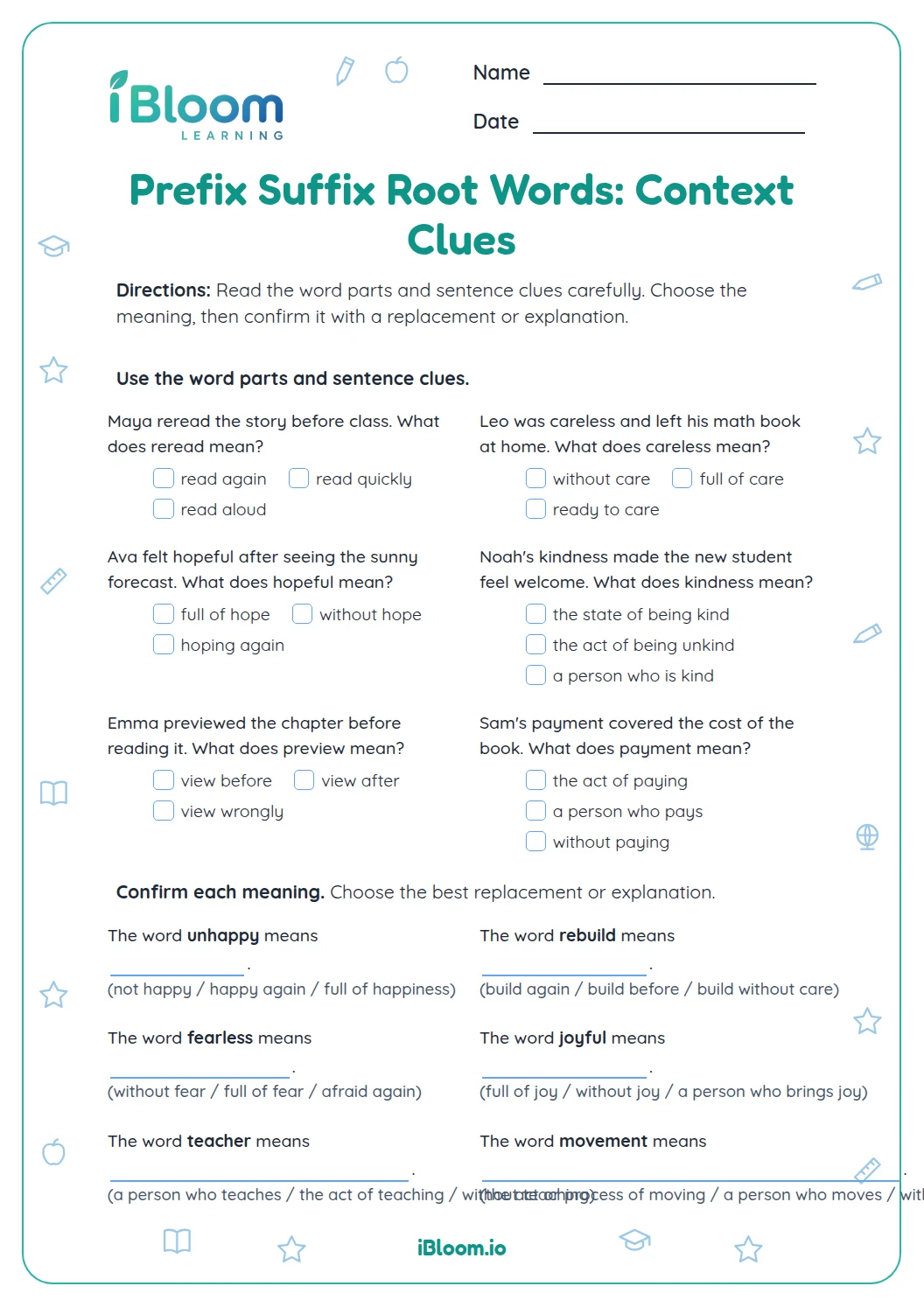
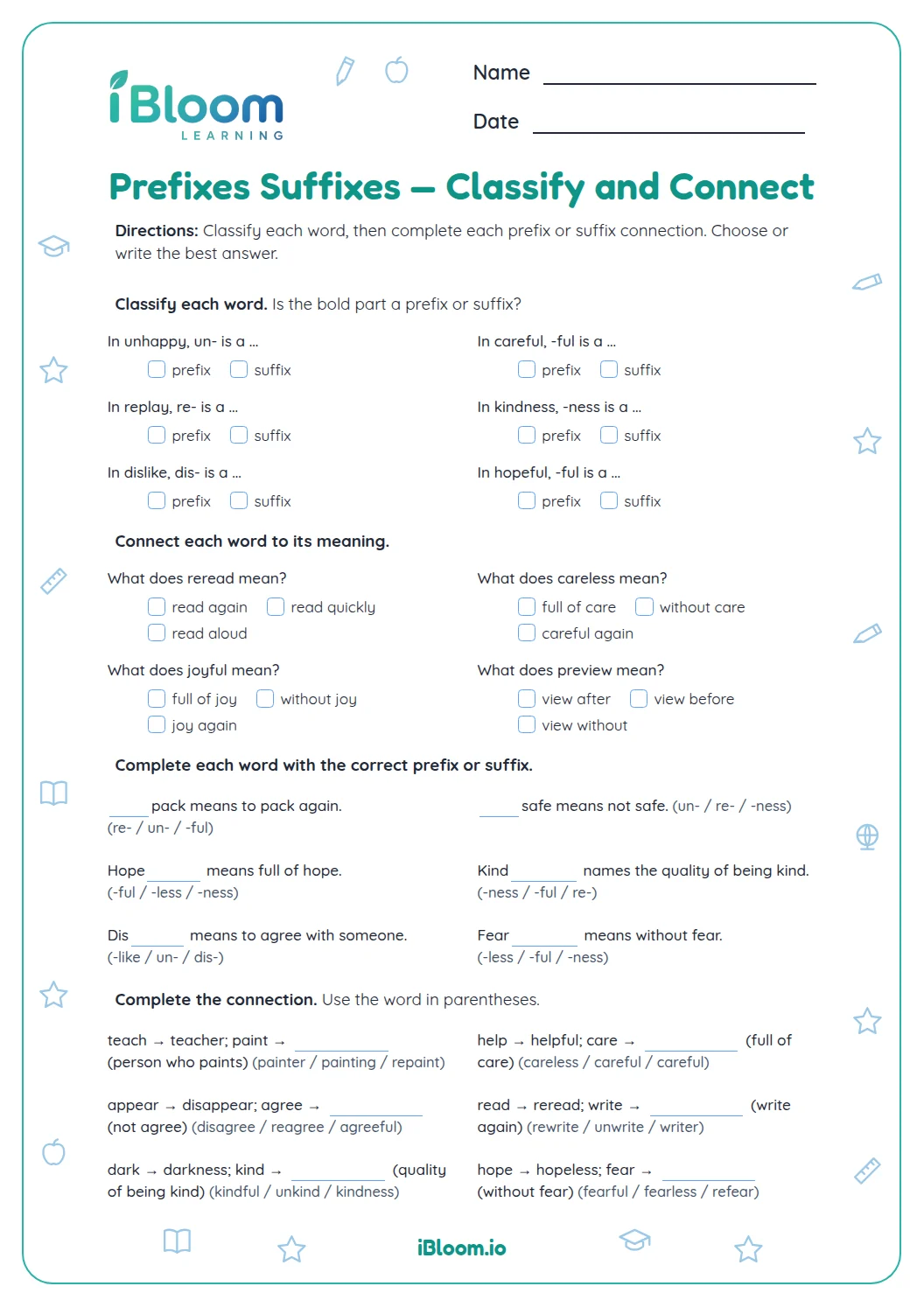
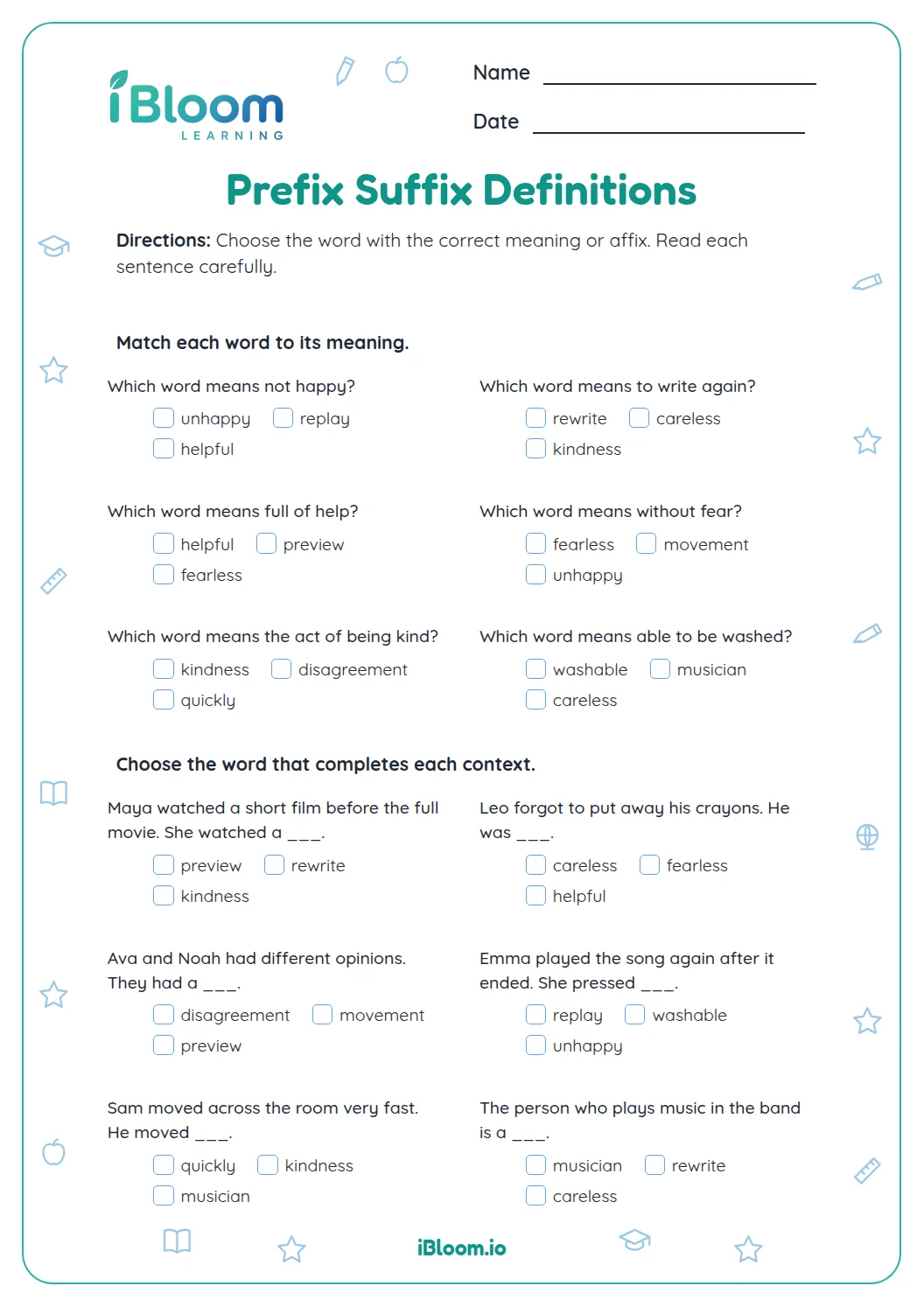
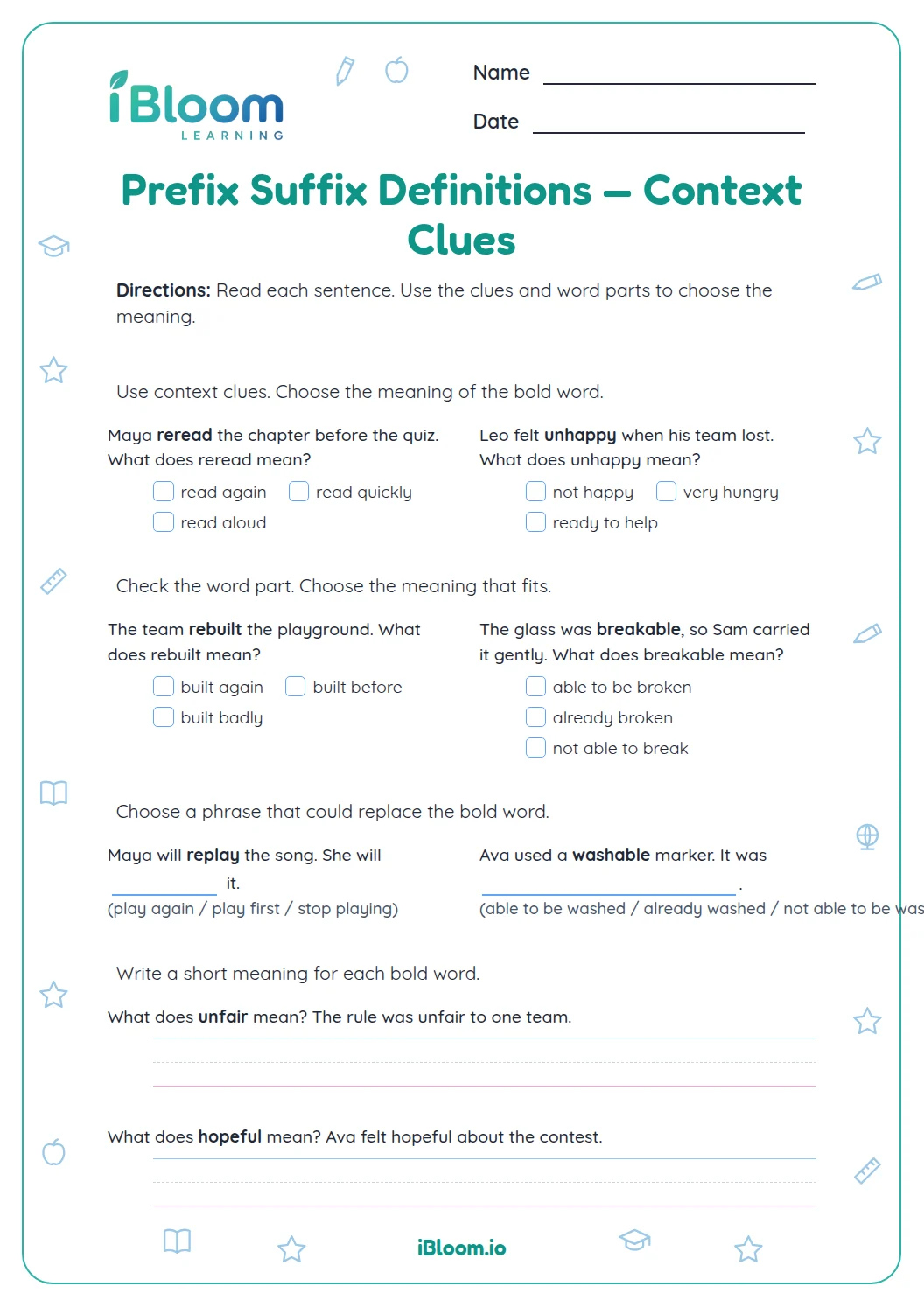
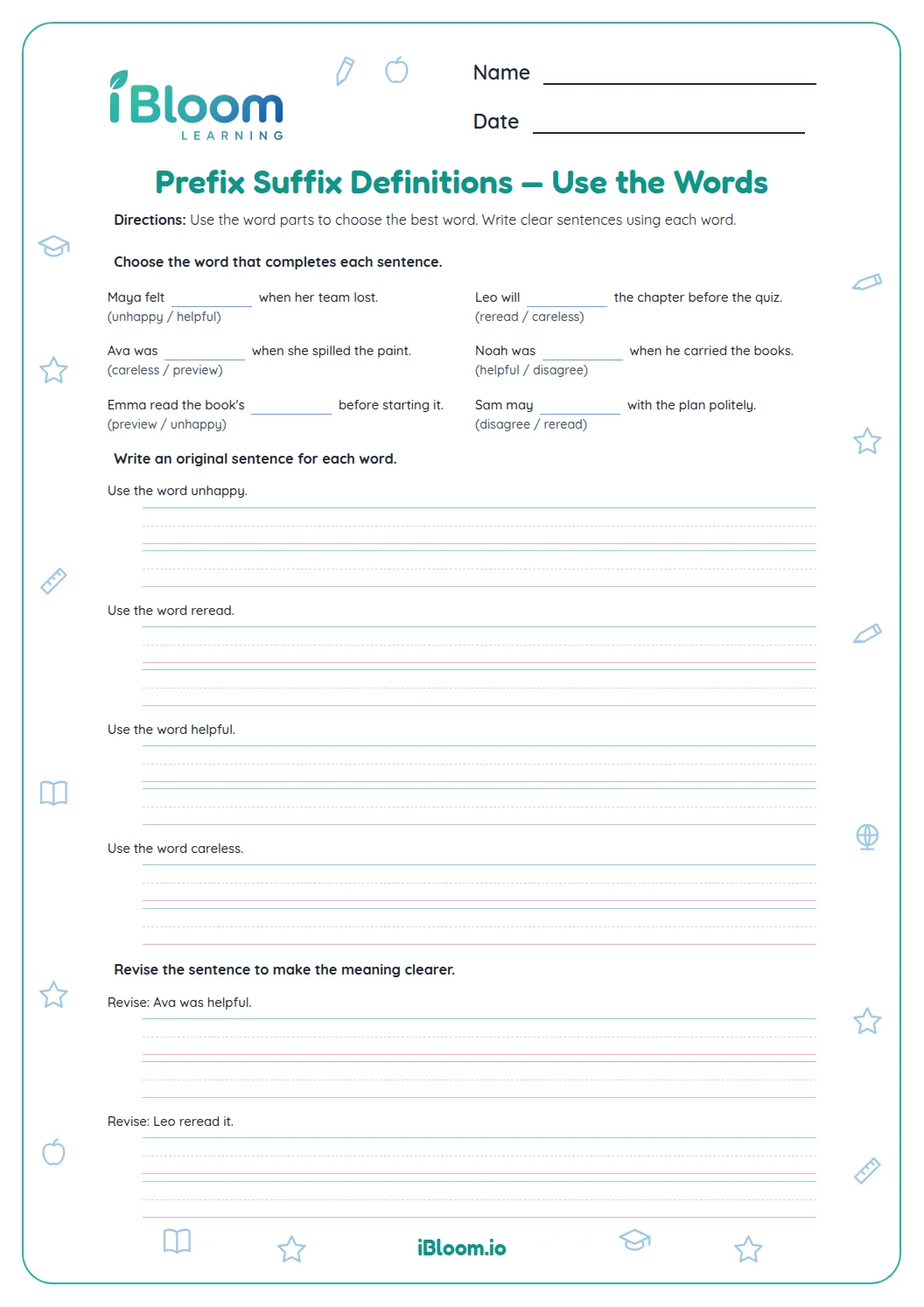
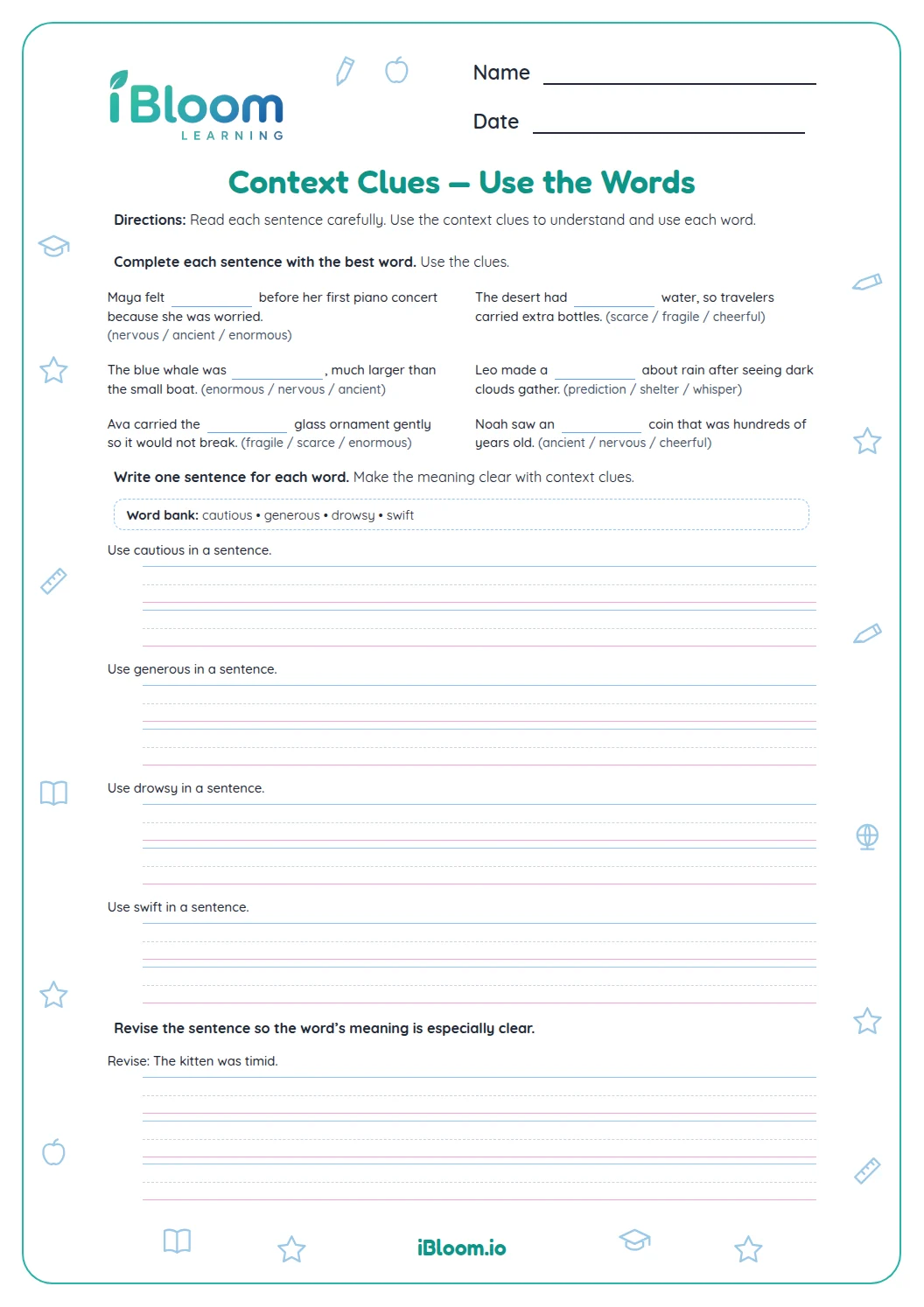
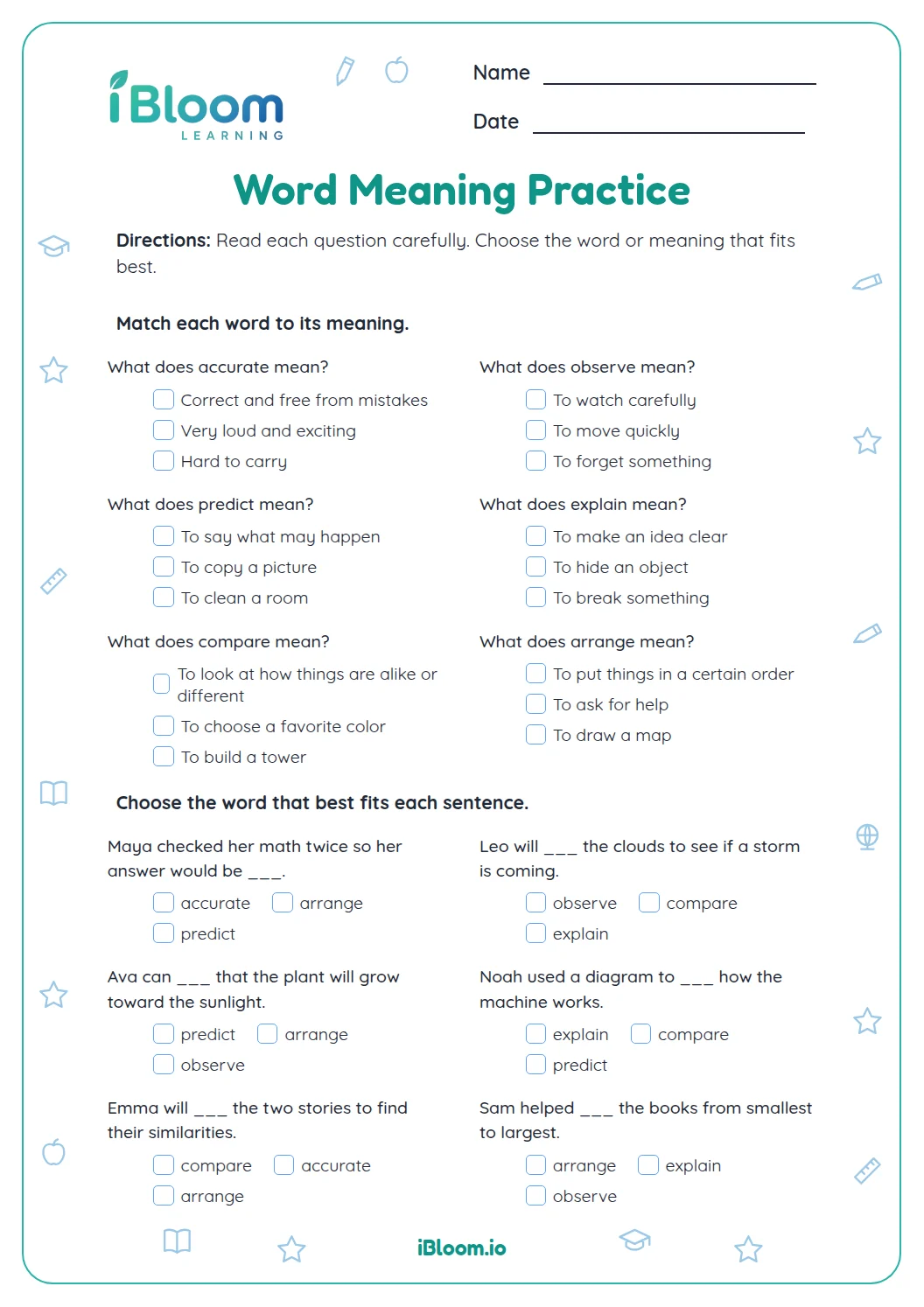
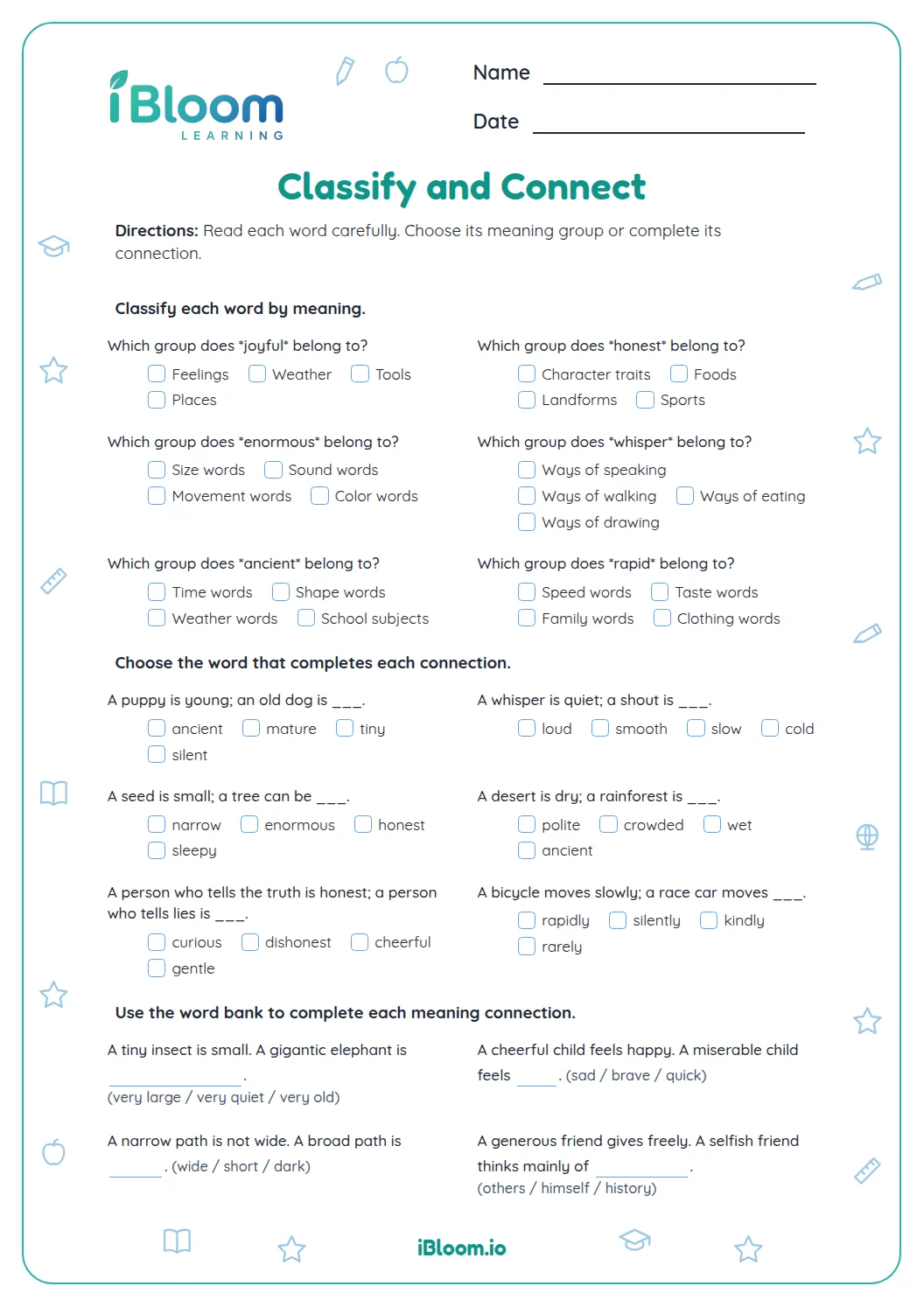
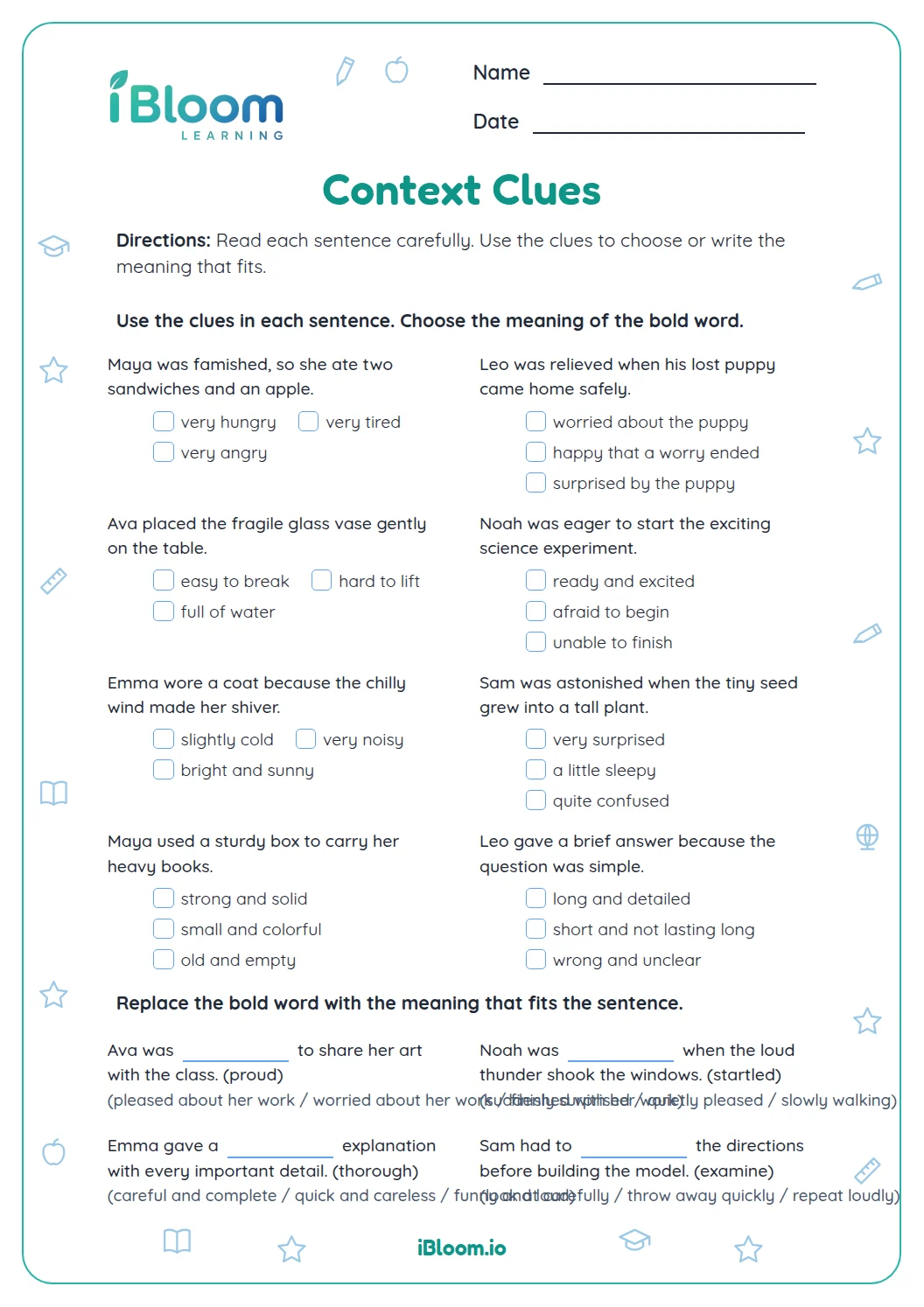
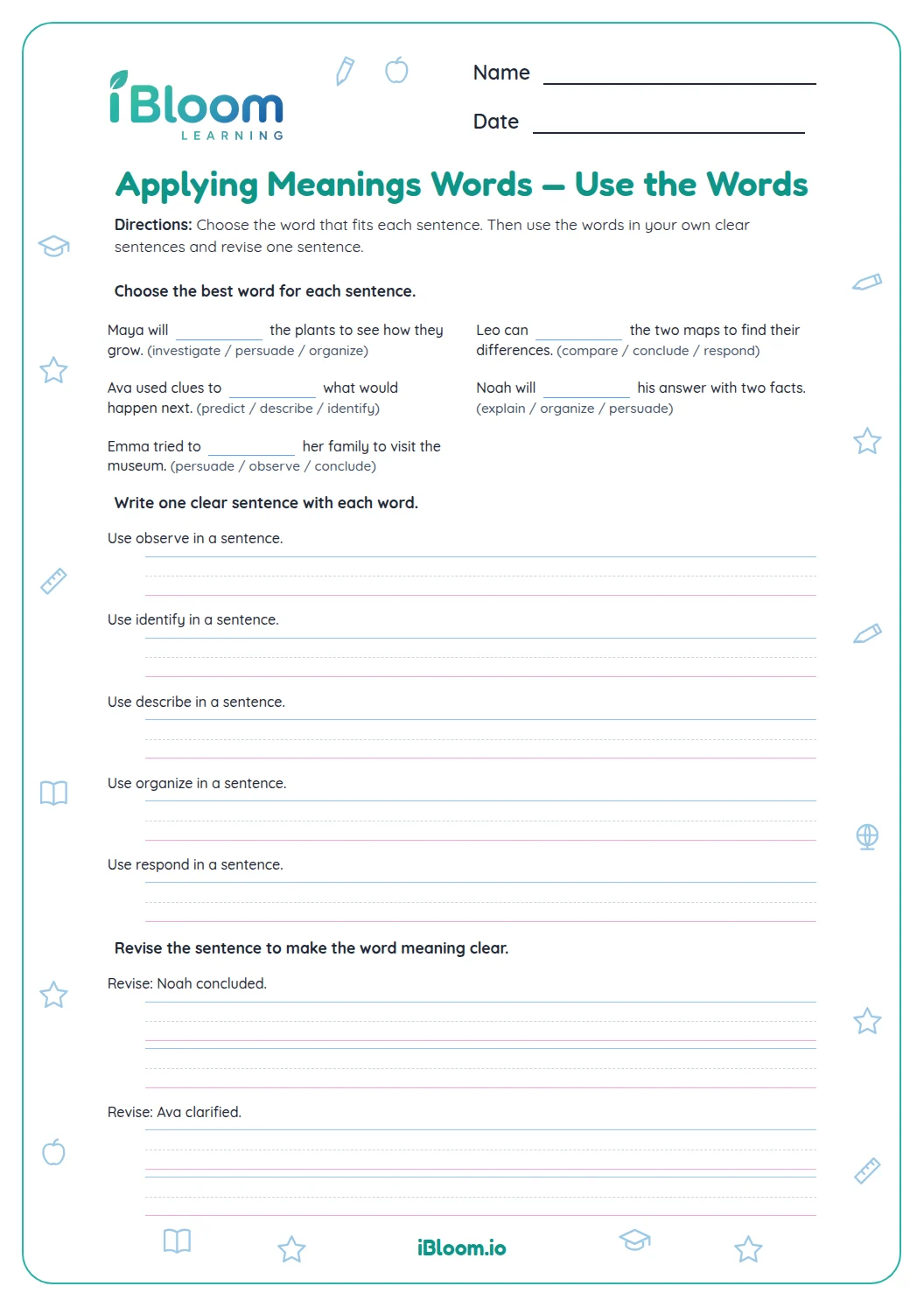
This printable Grade 4 worksheet gives learners 14 questions on prefixes, suffixes, roots, and compound words. The three parts move from a supported first step to independent practice, and a separate answer key makes it easy to check the work. Use the worked example to model the strategy before the learner begins. The practice supports Common Core L.4.4.b.
Aligned to L.4.4.b
How do word parts help reveal meaning?
A root or base carries the central meaning. A prefix changes a word at the beginning, and a suffix changes it at the end. Some words, such as sunlight, join two base words.
- 1preview = pre- + view
- 2Pre- means “before,” and view means “look.” Preview means to look before reading or watching.
What does each part ask learners to do?
Part A uses familiar roots and prefixes, Part B applies more prefixes and suffixes, and Part C connects whole words to meanings. The examples include tele-, photo-, re-, pre-, -ful, and -less.
How can an adult check the answers?
After each part, ask the learner to point to the word part that supports the answer. Use the key to check the selected meaning, then invite the learner to explain it in their own words.
How to use this worksheet
- 1Read the directions and name the skill being practiced.
- 2Work through the first part together, explaining the clue or step.
- 3Complete each question and keep the answers in order.
- 4Pause between parts to check the work with the key.
- 5For a missed item, redo the step and explain why the corrected answer fits.
Common word-part mix-ups
The mistake
Treating a prefix as part of the root.
The fix
Separate the beginning from the base word, as in re + write.
The mistake
Reading -less as “full of.”
The fix
Remember that -less means without; -ful means full of.
The mistake
Calling two joined base words a prefix and suffix.
The fix
In sunlight, sun and light are both base words.
Common Core alignment
Use familiar roots and affixes to infer the meanings of new words.
On this sheet: Learners interpret how prefixes and suffixes change base-word meaning.
Show the official wordingHide the official wording
Use common, grade-appropriate Greek and Latin affixes and roots as clues to the meaning of a word (e.g., telegraph, photograph, autograph ).
What to practice next
Make more practice
Further reading
Questions parents and teachers ask
What does a root or base word do?
A root or base word carries the central meaning of a word. In preview, view means look, while pre- adds the idea of before. Learners use familiar roots and affixes across the questions, then apply the clues to whole-word meanings.
What is on this Grade 4 worksheet?
The two-page printable has 14 questions in three parts. Learners interpret common roots and affixes, distinguish prefixes from suffixes, and connect a compound word to its two base words. A separate answer key is included for checking. Ask the learner to explain one answer aloud, then use the printed key to check the result and the clue that supports it.
How should learners use the answer key?
Have the learner finish a part before looking at the key. When an answer differs, ask them to identify the root or affix and explain its meaning. This keeps the focus on using word parts as clues rather than memorizing an answer.
How long does the worksheet take?
Plan for about 15 to 20 minutes, depending on how much discussion the learner needs. The three parts can be completed in one sitting or with a short pause between groups. Use the key after each part to guide review.
Does the worksheet include a worked example?
Yes. The page text models preview by separating pre- from view and explaining how the parts combine. Learners then use familiar examples such as tele-, photo-, re-, -ful, and -less in the printed questions. Ask the learner to explain one answer aloud, then use the printed key to check the result and the clue that supports it.