





About this worksheet
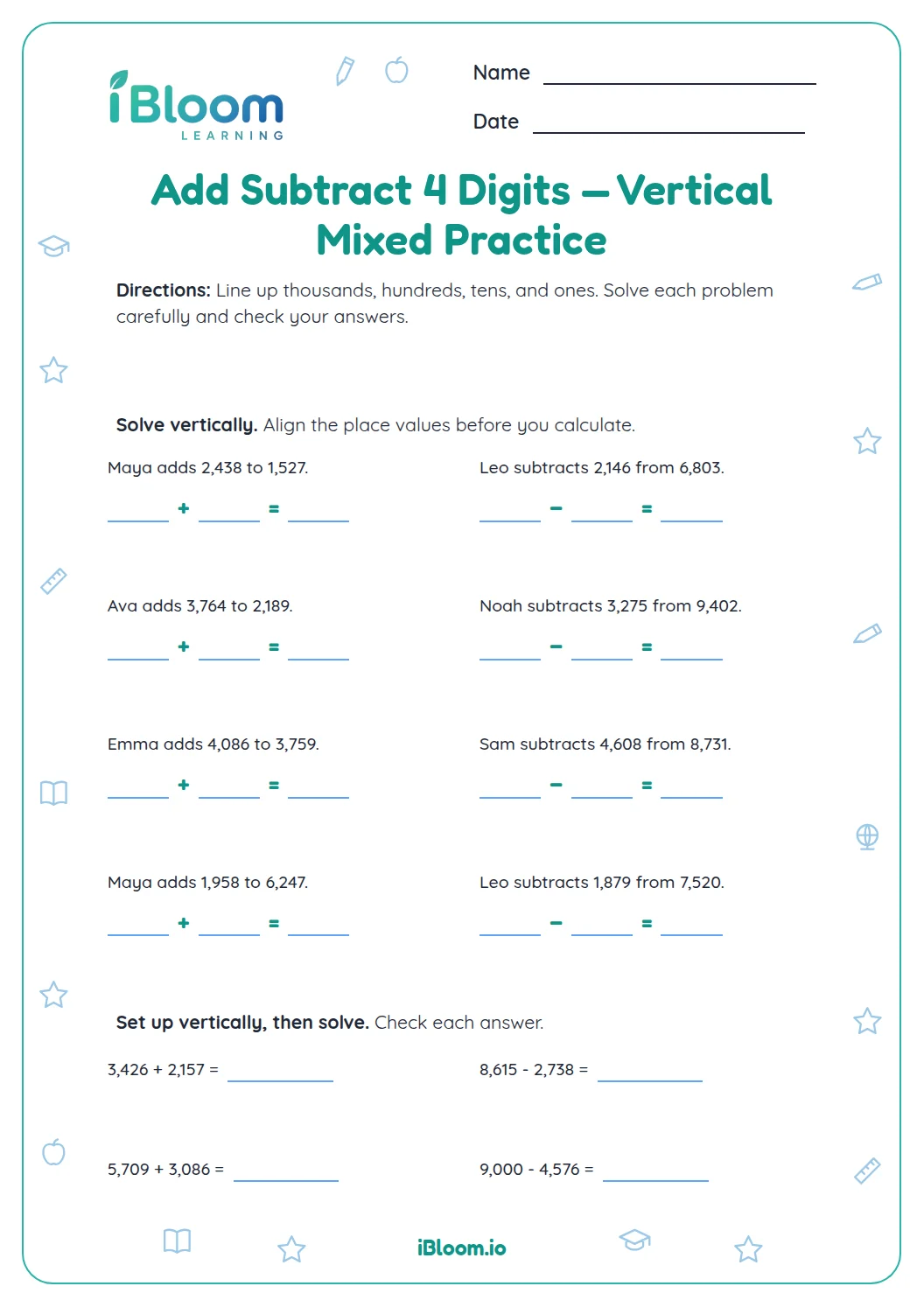
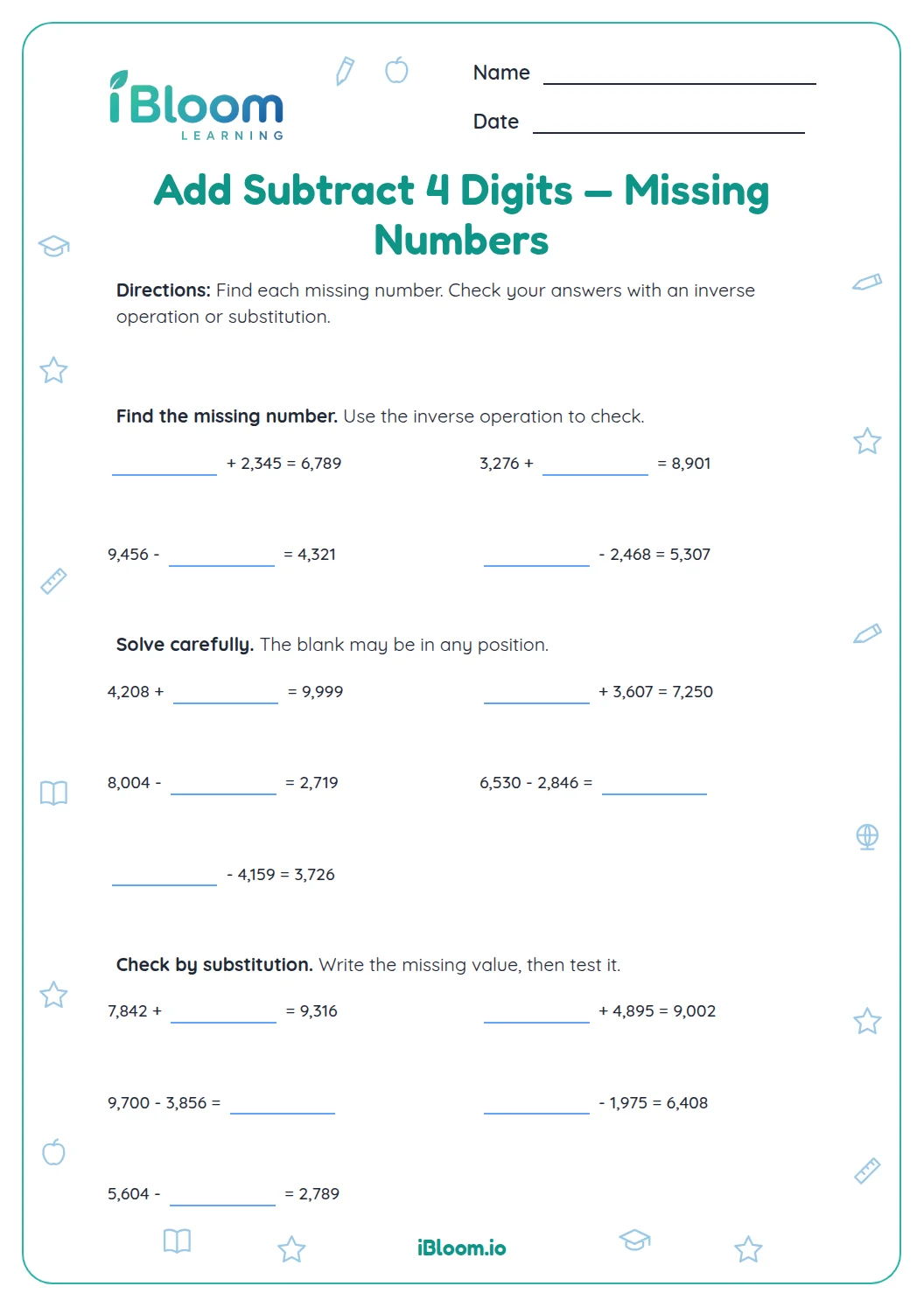
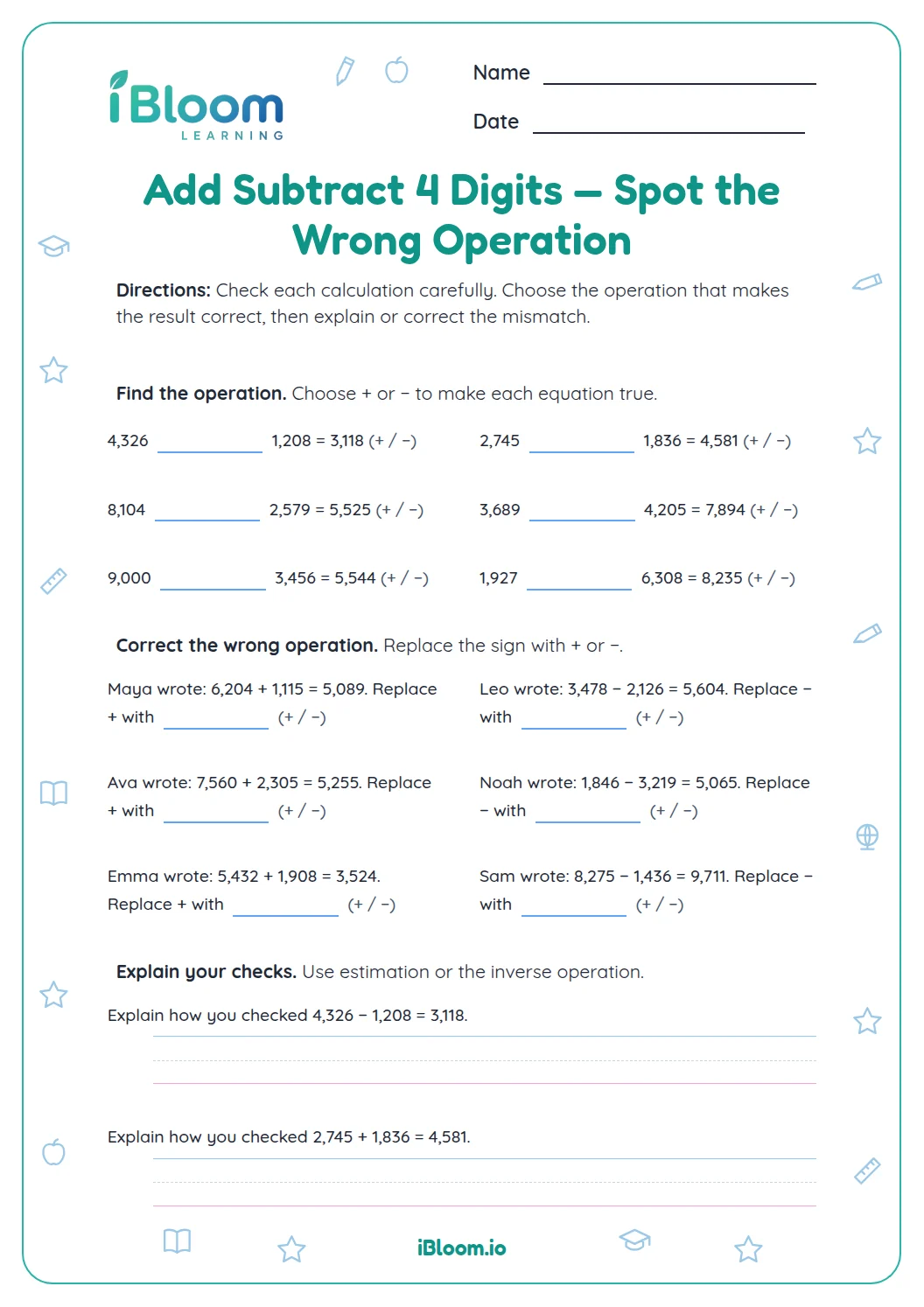
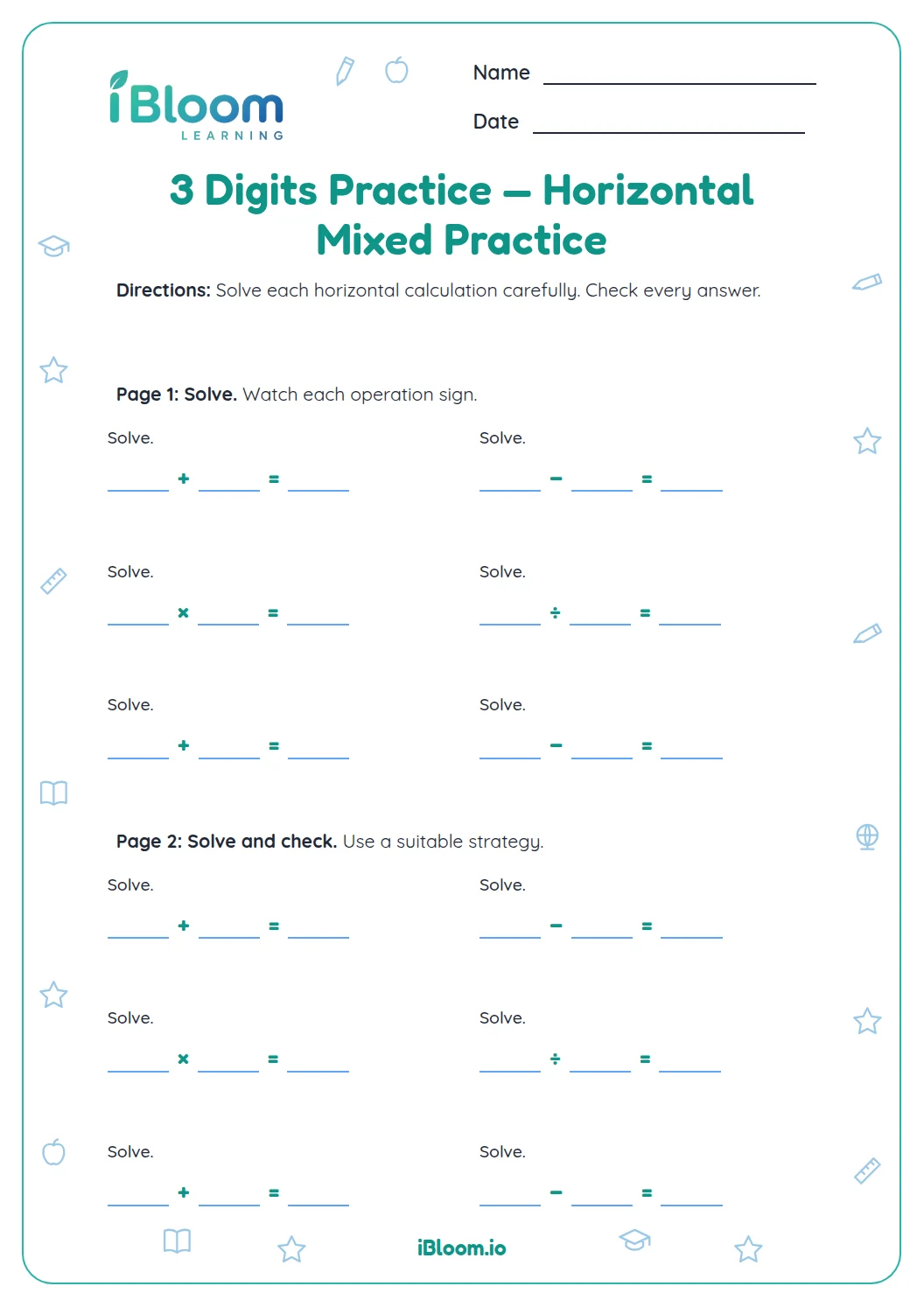
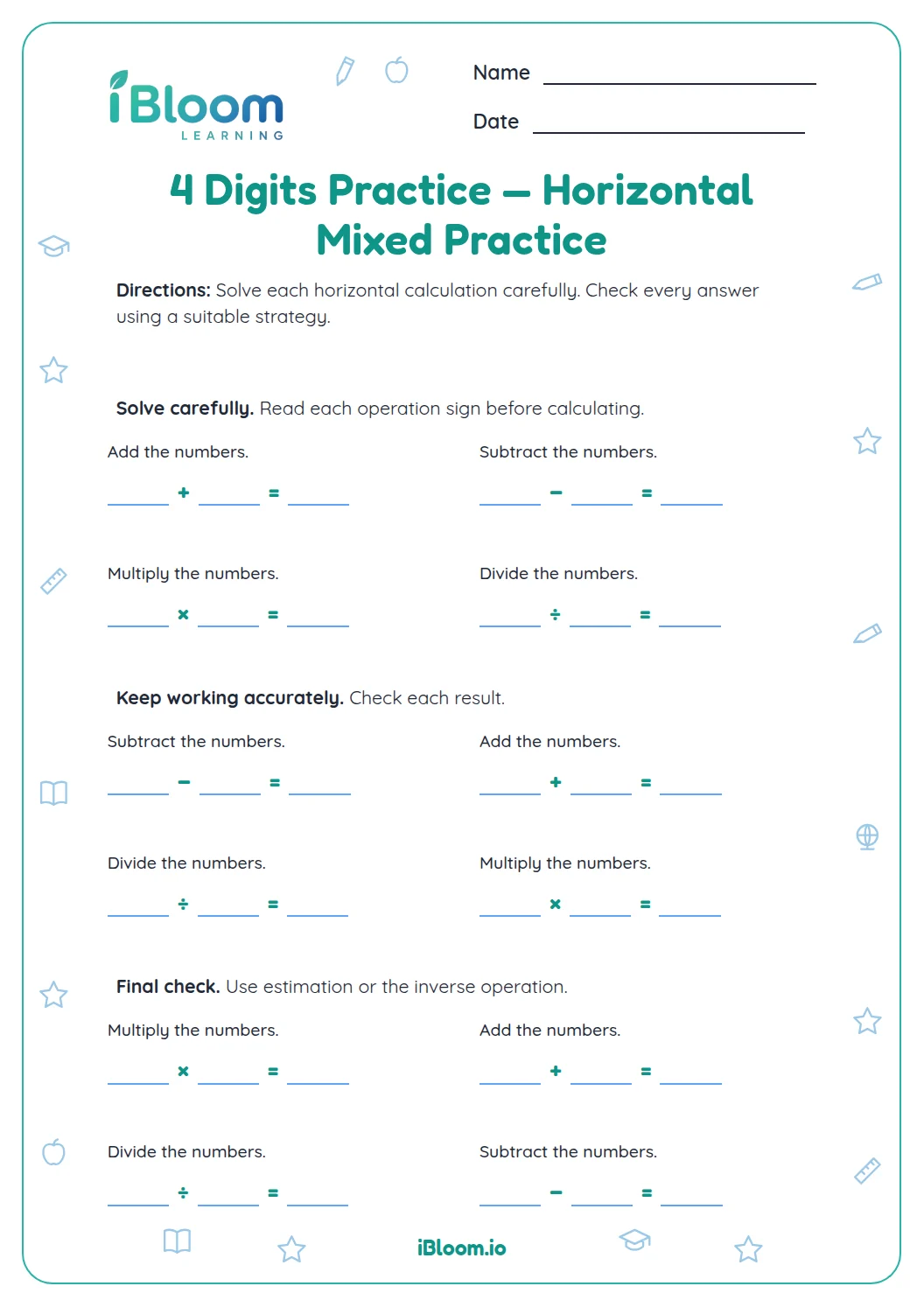
This Grade 4 mixed-practice worksheet gives students 20 horizontal addition and subtraction equations with four-digit numbers. The sequence starts with addition, moves to subtraction, then mixes both operations, including regrouping across zeros. Students can show place-value work beside each equation and check answers with the key. The skill aligns to CCSS 4.NBT.B.4 for fluent multi-digit addition and subtraction.
Aligned to 4.NBT.B.4
How do you add four-digit numbers?
Add ones, tens, hundreds, and thousands in place-value columns. When a column reaches 10 or more, regroup into the next place.
- 13,487 + 2,956
- 27 ones + 6 ones = 13 ones; regroup 1 ten.
- 3The sum is 6,443.
What helps when subtraction crosses a zero?
Regroup from the nearest place with a nonzero digit, then pass one unit through each place to the right as needed. Keep track of the new digit values before subtracting.
How can you check a mixed-operation answer?
For addition, subtract one addend from the sum. For subtraction, add the difference to the number subtracted. The result should return to the starting number.
How to use this worksheet
- 1Copy each equation with digits aligned by place value.
- 2Circle or mark the operation sign before computing.
- 3Regroup carefully when a column needs more units.
- 4For subtraction across zero, rename each place one step at a time.
- 5Use the inverse operation to check the answer.
Common mistakes and quick fixes
The mistake
Ignoring a regrouped ten or hundred
The fix
Write the new value in the next column before continuing.
The mistake
Subtracting the smaller digit from the larger in every column
The fix
Regroup when needed; preserve the top number minus bottom number order.
The mistake
Switching the sign in a mixed set
The fix
Mark plus or minus before starting each equation.
Common Core alignment
The worksheet builds accuracy with multi-digit addition and subtraction.
Solve the four-digit sums and differences using place-value regrouping.
On this sheet: All 16 equations use multi-digit addition or subtraction, including regrouping.
Show the official wordingHide the official wording
Fluently add and subtract multi-digit whole numbers using the standard algorithm.
What to practice next
Make more practice
Further reading
Questions parents and teachers ask
How many equations are included?
There are 20 horizontal equations. The first part practices addition, the next part practices subtraction, and the final part mixes both signs for review. The same horizontal format and four-digit numbers continue throughout, with regrouping included. The separate answer key follows the same two-page sequence.
Do the problems include regrouping?
Yes. Many sums and differences require regrouping, including subtraction problems with zeros in a place. Students can write the standard algorithm beside each horizontal equation. Align thousands with thousands, hundreds with hundreds, tens with tens, and ones with ones before calculating.
Why are the numbers written horizontally?
The horizontal format keeps attention on the operation sign and the full expression. Students can still set up the numbers vertically in the open work area when they need place-value columns. Align thousands with thousands, hundreds with hundreds, tens with tens, and ones with ones.
What is a good way to check a subtraction answer?
Add the difference to the number that was subtracted. If the sum equals the starting number, the subtraction is correct. For example, check 8,014 − 3,678 by adding 3,678 to the difference. Regroup across each zero one place at a time before subtracting.
Which grades can use this page?
The listed audience spans Grades 3–6, with the four-digit addition and subtraction focus aligned most closely to Grade 4 practice. An adult can select the page when students are ready to work with these number sizes. The page can be assigned selectively when students are ready for four-place values.
What should a learner do after this drill?
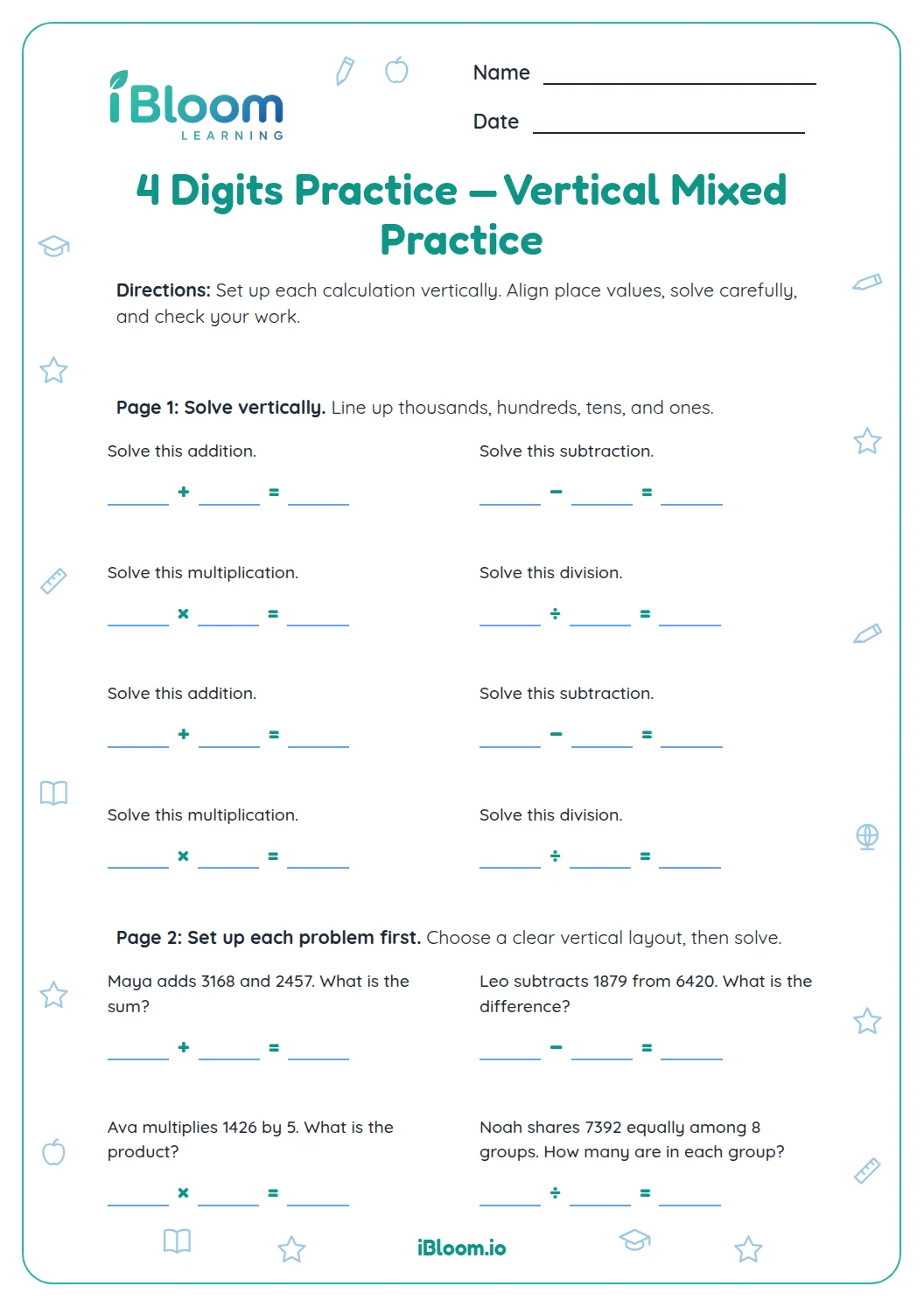
Move to the linked four-digit vertical practice to set up the same size numbers in columns. Students can compare the regrouping steps with the horizontal work here, then use the inverse operation to check each result. The two formats practice the same addition and subtraction skills.