








About this worksheet
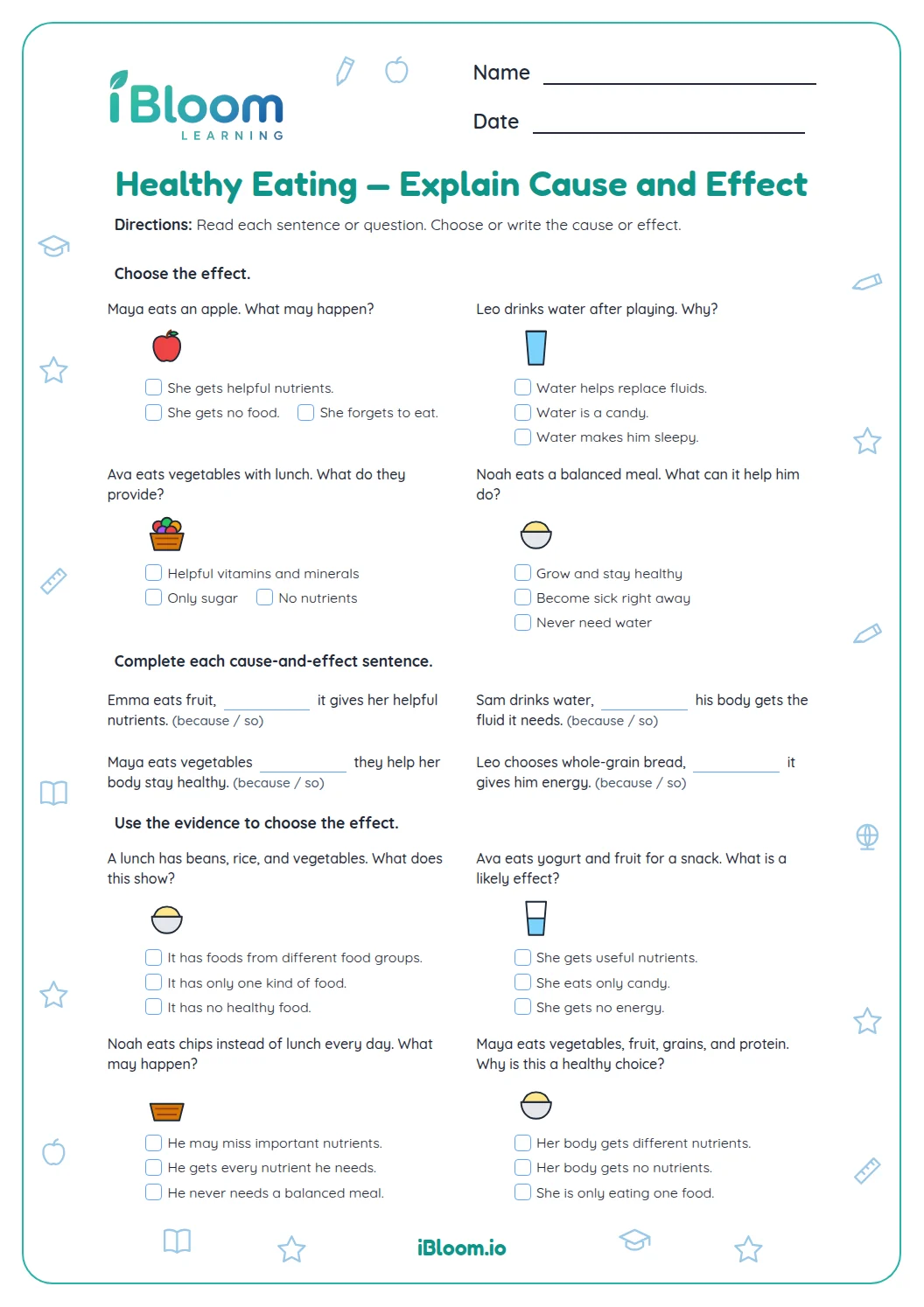
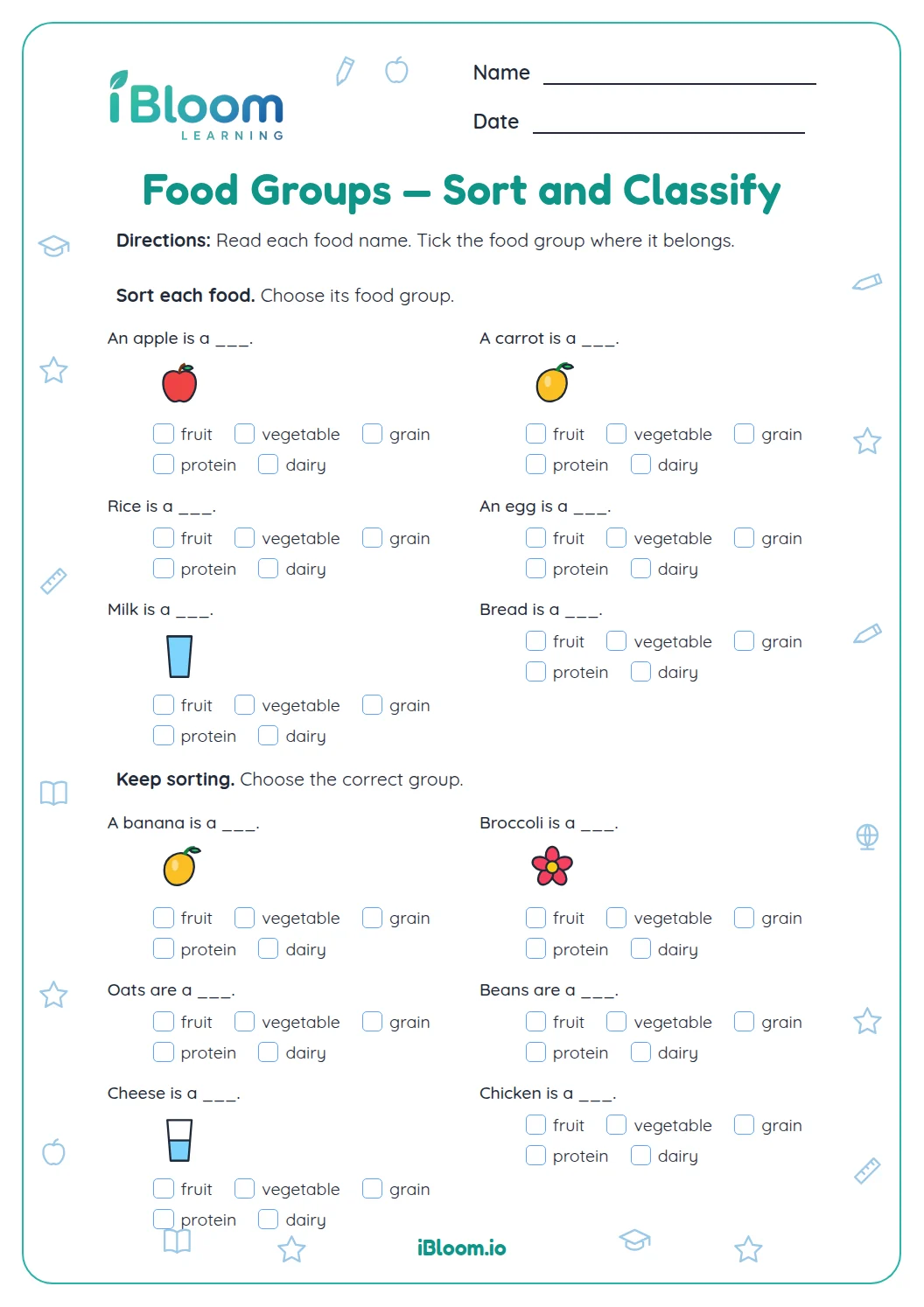
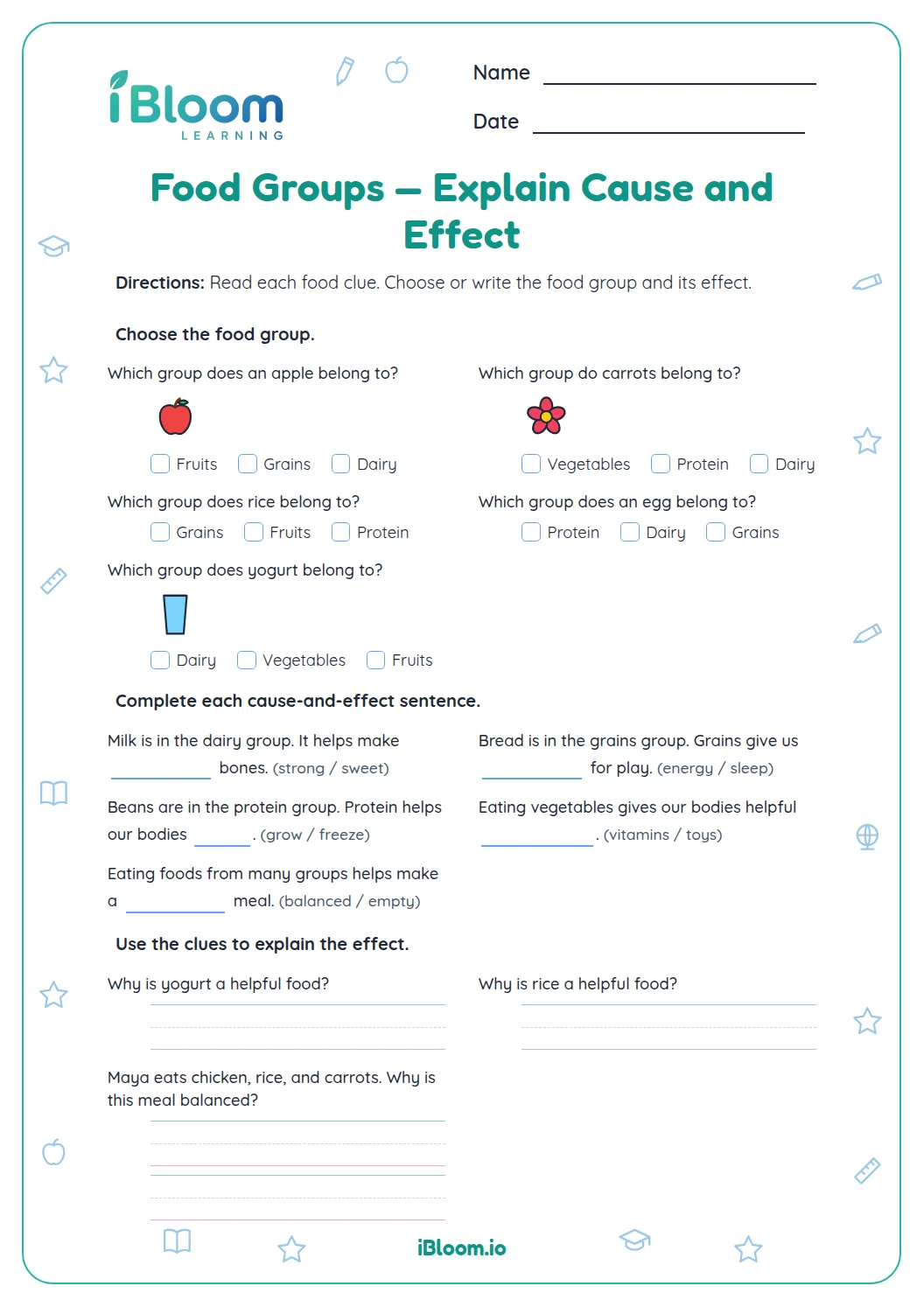
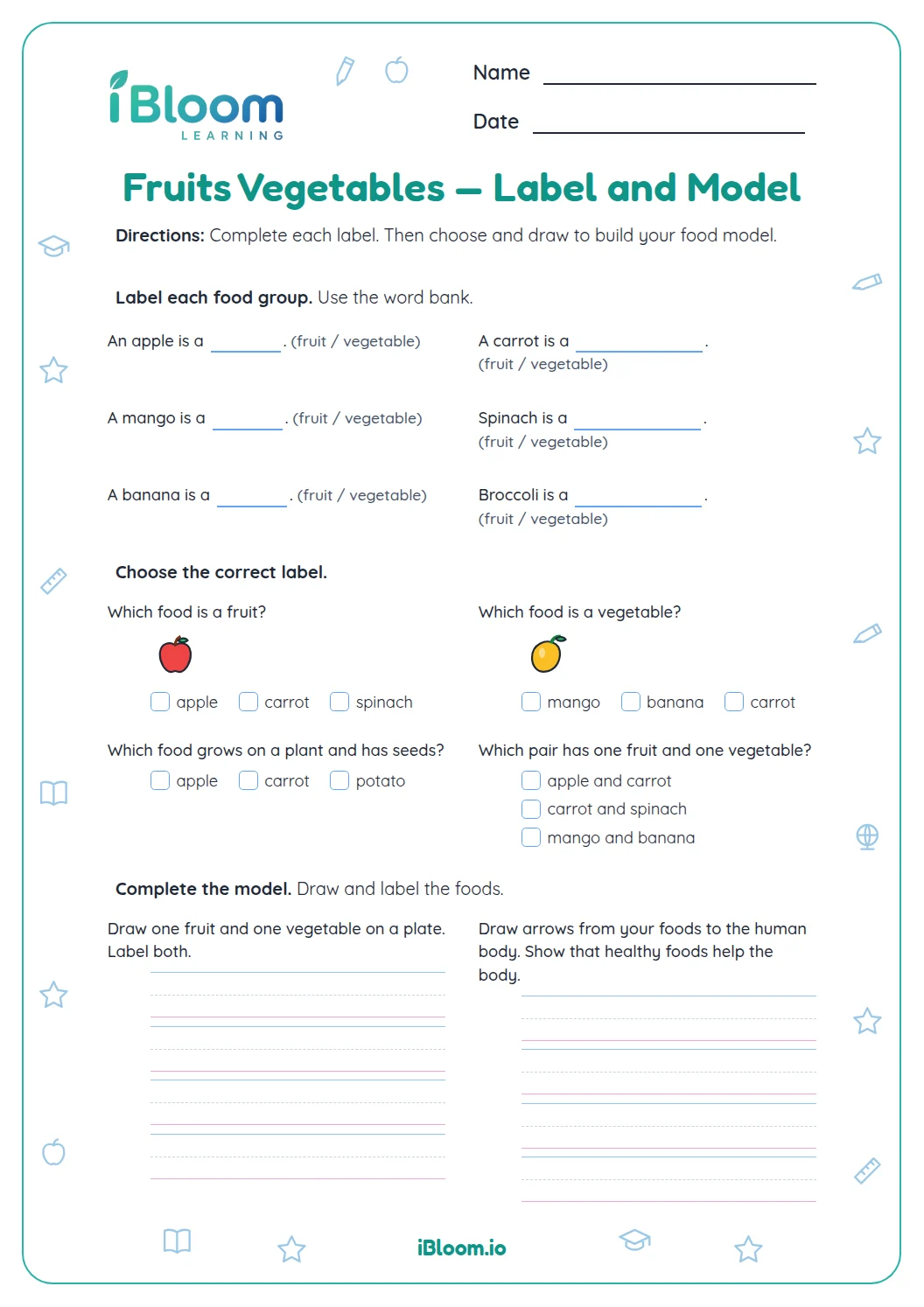
This Grade 1 science worksheet uses familiar food examples to practice reasoning about variety, food groups, water, and simple hygiene. Children answer 12 choice questions and write four short responses. The page replaces the old one-question plant prompt with a complete healthy-eating review. The key includes sample answers when more than one response can make sense.
How do food choices support a healthy routine?
Foods provide different nutrients, so eating a variety gives the body different kinds of nourishment. Water is a useful drink when someone is thirsty, and washing hands before eating helps keep food clean.
Question 8 checks the central idea: different foods provide different nutrients. A fruit can be part of a varied snack, while beans or eggs are examples of protein foods.
How can a child explain a food choice?
A clear answer names a food and gives a simple reason. For example, “I would choose water because I am thirsty.” The four written questions accept different correct examples, so the answer key offers samples.
What does each part ask children to do?
Part A presents 12 choices about food groups and routines. Part B asks for four short explanations or examples.
How to use this worksheet
- 1Read each choice aloud if needed.
- 2Ask what the question is asking before looking at the options.
- 3In Part A, choose the answer that best fits the situation.
- 4In Part B, name one food or give one simple reason.
- 5Compare written responses with the sample key; accept other sensible answers.
Common mistakes and quick fixes
The mistake
Thinking one food provides every nutrient.
The fix
Remember that different foods provide different nutrients.
The mistake
Calling water a food group.
The fix
Water is a drink choice that helps when a person is thirsty.
The mistake
Treating a sample response as the only possible answer.
The fix
Accept another accurate food example or clear reason.
What to practice next
Make more practice
Questions parents and teachers ask
What does healthy eating mean for young children?
Healthy eating means choosing a variety of foods and drinking water as part of everyday meals and snacks. No single food does every job. This worksheet asks children to recognize fruits, vegetables, grains, protein foods, and practical choices without labeling foods as “good” or “bad.”
How many questions are included?
The worksheet has 16 questions in two parts: 12 multiple-choice decisions and four short written responses. The answer key gives the intended choices and sample responses for questions where children can answer in their own words. Invite the child to explain the choice in their own words, then compare it with the skill practiced on this page.
Does the page tell children that one food is always best?
No. The questions focus on variety, food groups, water, and handwashing. Children compare specific choices in each item and consider how different foods can contribute different nutrients. Invite the child to explain the choice in their own words, then compare it with the skill practiced on this page.
How can I support a child who is unsure about food groups?
Use familiar foods and ask what the child recognizes first. A fruit, vegetable, grain, or protein example can help them sort the choices. Accept different sensible examples for the written responses. Invite the child to explain the choice in their own words, then compare it with the skill practiced on this page.
What can children practice next?
Children can build on this page by naming fruits and vegetables, sorting familiar foods, or learning about the senses. The linked pages keep the examples concrete and suitable for early elementary learners. Invite the child to explain the choice in their own words, then compare it with the skill practiced on this page.