

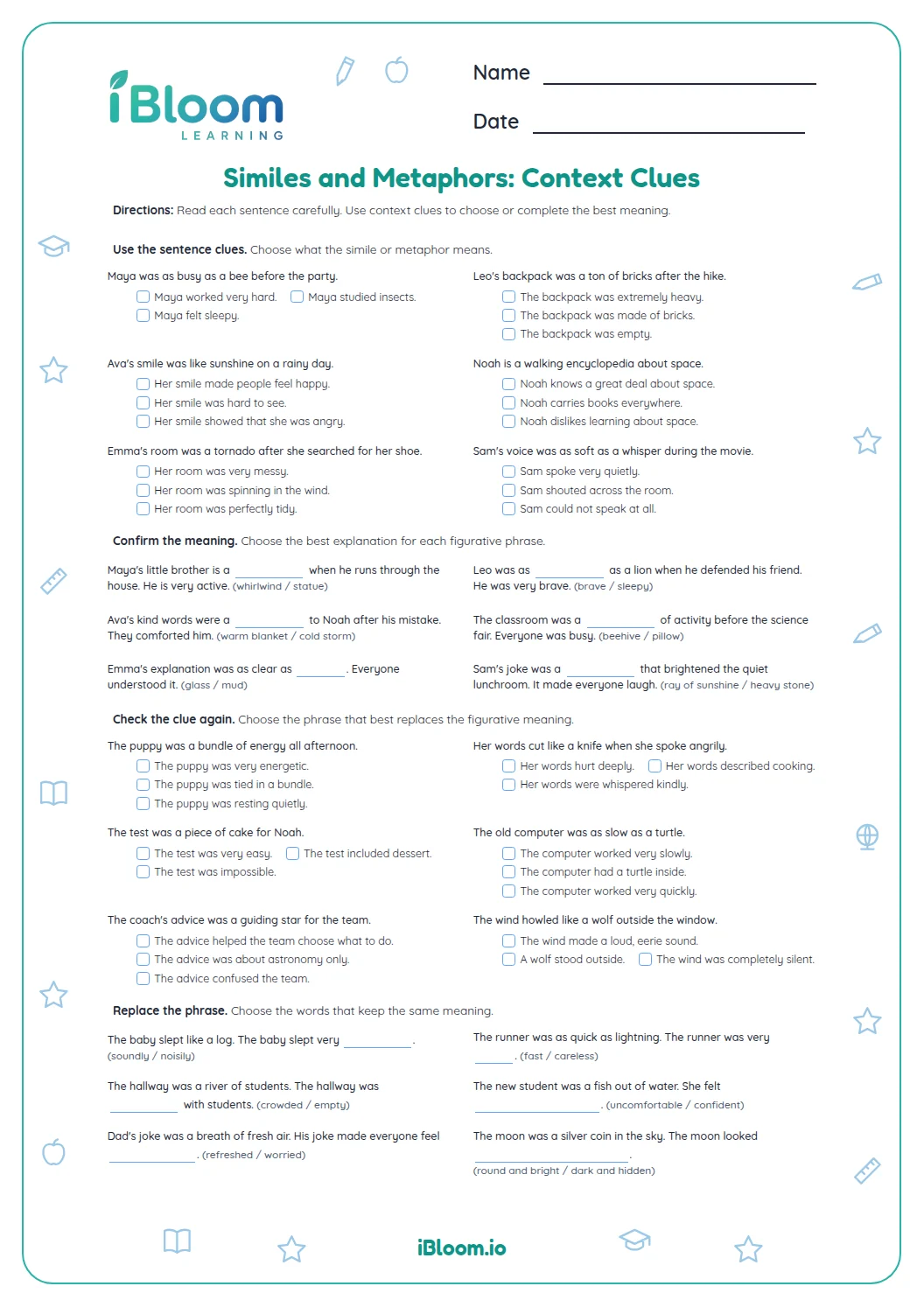
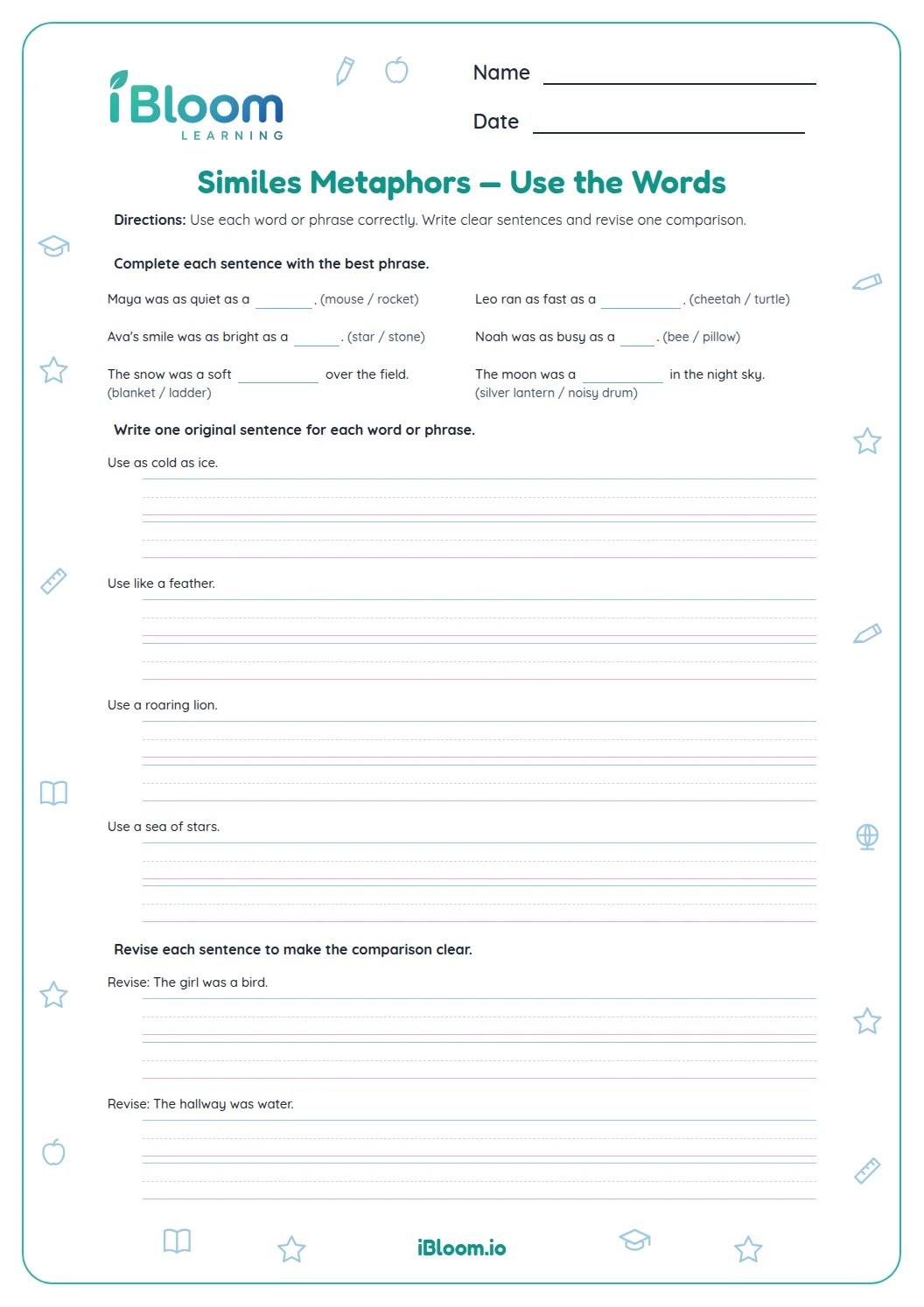
About this worksheet
This Grade 4 printable uses one original paragraph about students building a courtyard garden to practice vocabulary reasoning. In Part B, children choose meanings for words such as bleak, accessible, and sufficient by using nearby details. In Part C, they explain how passage clues support an interpretation. The answer key includes the selected answers and sample responses for open-ended questions. The practice aligns with Common Core L.4.4a: using context as a clue to word meaning.
Aligned to L.4.4a
How do context clues reveal a word’s meaning?
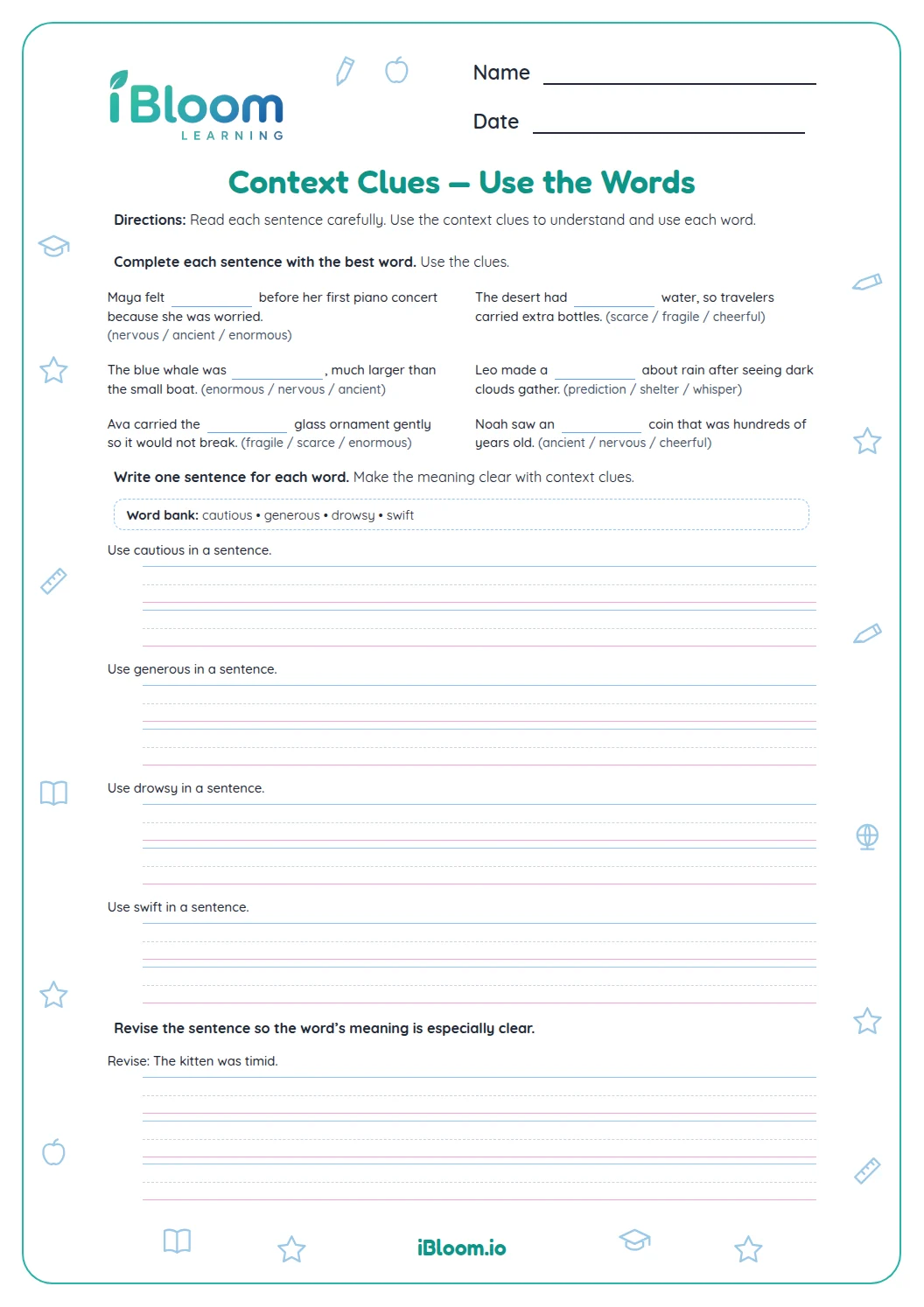
A context clue is a nearby detail that helps a reader infer an unfamiliar word. The clue may give an example, explain a result, or restate an idea. Readers combine clues rather than guessing from the word alone.
- 1The paragraph says Amira left room for a wheelchair to turn.
- 2That detail explains accessible.
- 3The space is planned so people can use it.
- 4Answer: room for a wheelchair to turn
How can a reader support a vocabulary answer?
A strong answer points to the exact detail that supports the meaning. For example, “one end kept dipping” explains why moving the boards was awkward. Naming that clue shows how the answer came from the paragraph.
What should a complete response include?
The last five questions ask children to explain an inference or name a clue. A complete response repeats the important idea in a sentence and includes a detail from the passage. The key offers sample wording; children may phrase a supported answer differently.
How to use this worksheet at home or in class
- 1Read the passage once to understand the garden project.
- 2Reread the sentence around each word in Part B.
- 3Try a possible meaning in the sentence and check that it fits the details.
- 4For Part C, answer in a complete sentence and point to a passage clue.
- 5Use the key to compare the reasoning, not just the exact wording.
Common mistakes and quick fixes
The mistake
Choosing a familiar meaning that does not fit the sentence.
The fix
Substitute the choice into the sentence and see whether the nearby detail still makes sense.
The mistake
Using only the word’s tone to guess what it means.
The fix
Find a concrete example, result, or explanation in the passage.
The mistake
Giving an answer without showing its clue.
The fix
Add a phrase such as “The passage says…” and include the supporting detail.
Common Core alignment
This review practices vocabulary reasoning through context in a connected paragraph.
Use details and examples in the paragraph as clues to word meaning.
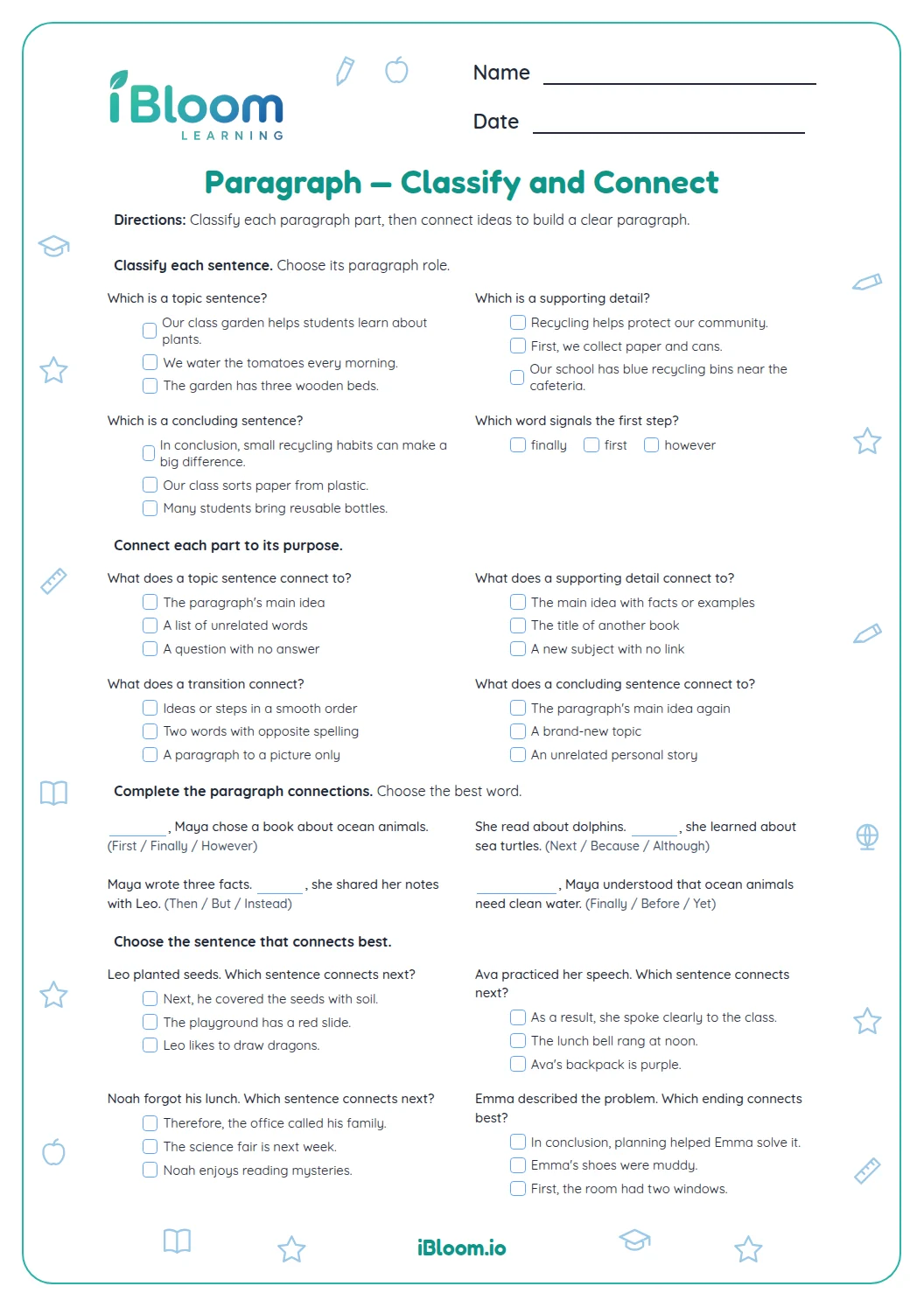
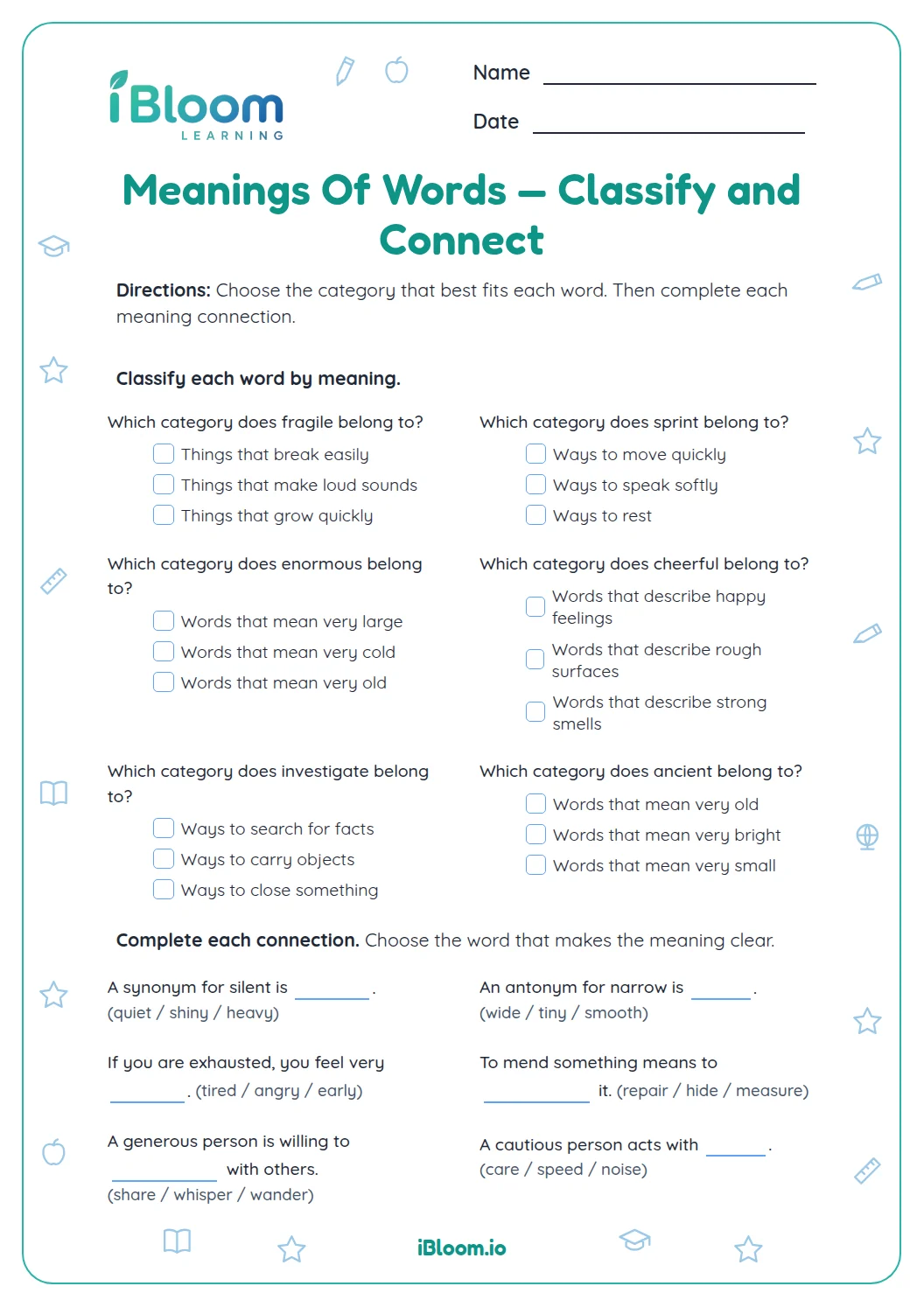
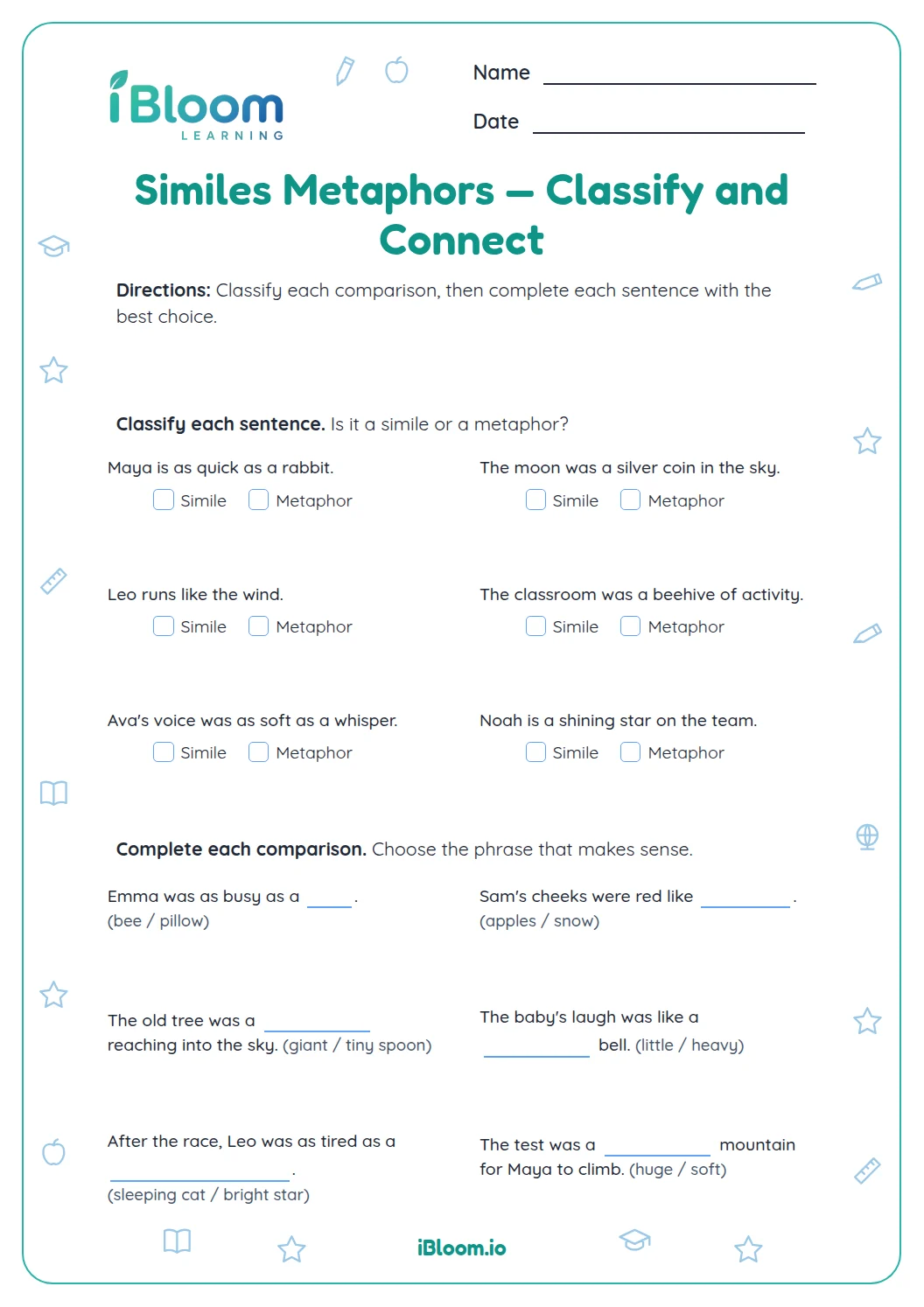
On this sheet: Questions ask readers to infer meanings from nearby details and explain which context clues support an answer.
Show the official wordingHide the official wording
Use context (e.g., definitions, examples, or restatements in text) as a clue to the meaning of a word or phrase.
What to practice next
Make more practice
Further reading
Questions parents and teachers ask
What does bleak mean in the passage?
In the passage, bleak describes the bare courtyard corner before the garden was planted. It means gloomy or cheerless. The detail that the corner was bare supports that meaning, while the later garden scenes show how the place changes.
How can I help a child explain an answer?
Ask the child to point to a detail near the target word and say how it supports the chosen meaning. A response such as “One end kept dipping, so the first attempt was awkward” links evidence from the passage to the vocabulary answer.
Are the written answers required to match the key word for word?
No. The answer key gives sample responses for questions that invite explanation. Accept another response when it answers the question and uses a detail that fits the passage. The multiple-choice section has one keyed choice for each question. Ask the child to reread the prompt and explain which words or details support the response.
What is the difference between a clue and a guess?
A clue is a detail the reader can point to in the paragraph, such as leaving room for a wheelchair to turn. A guess may sound possible but does not connect to the text. Ask the child to show the sentence that supports the meaning.
How long does this worksheet take?
Plan for about 25 minutes to read the paragraph, complete ten meaning questions, and write five short explanations. Children may benefit from pausing to underline a clue before answering each item. The answer key includes sample responses for the written questions.