





About this worksheet
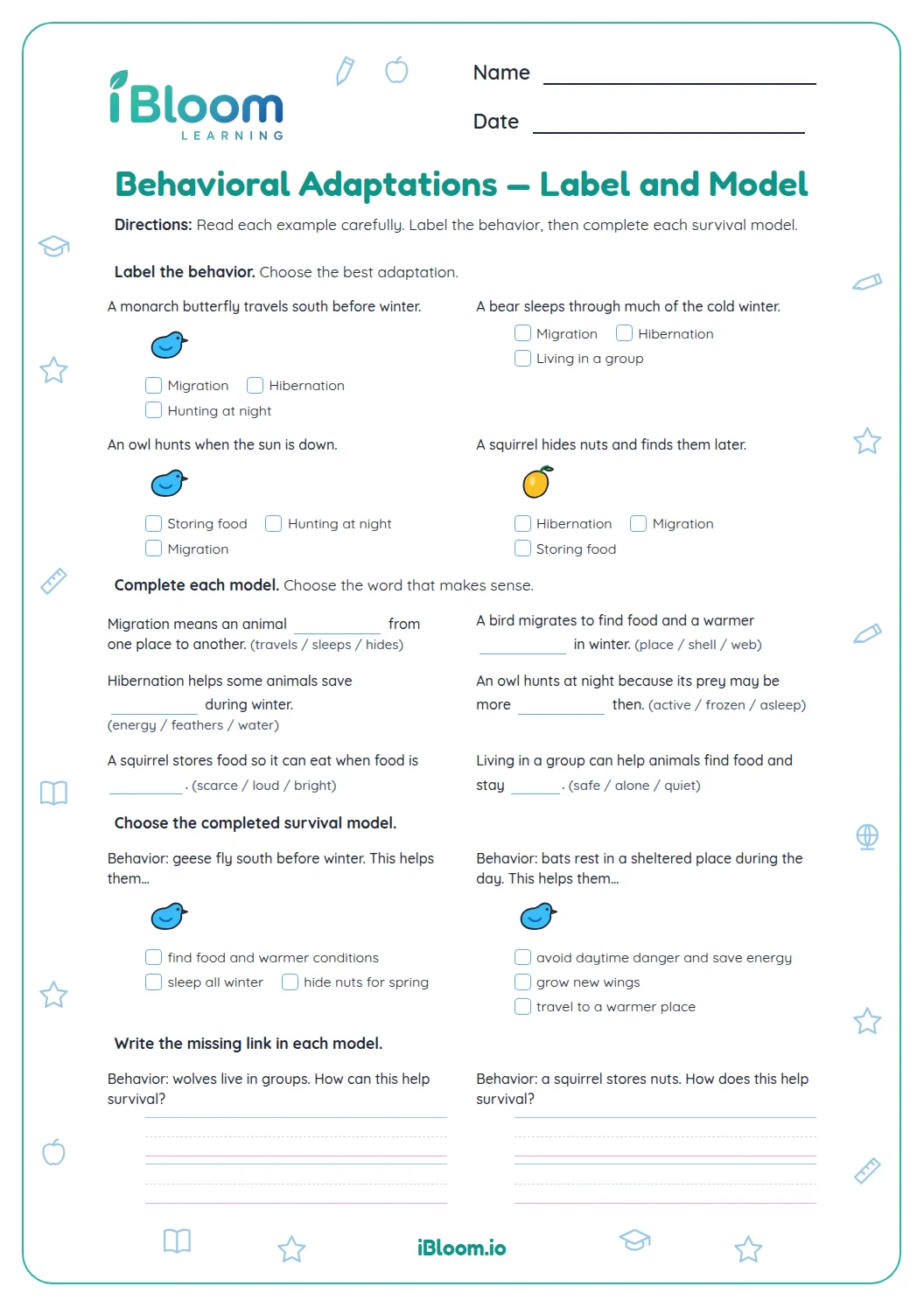
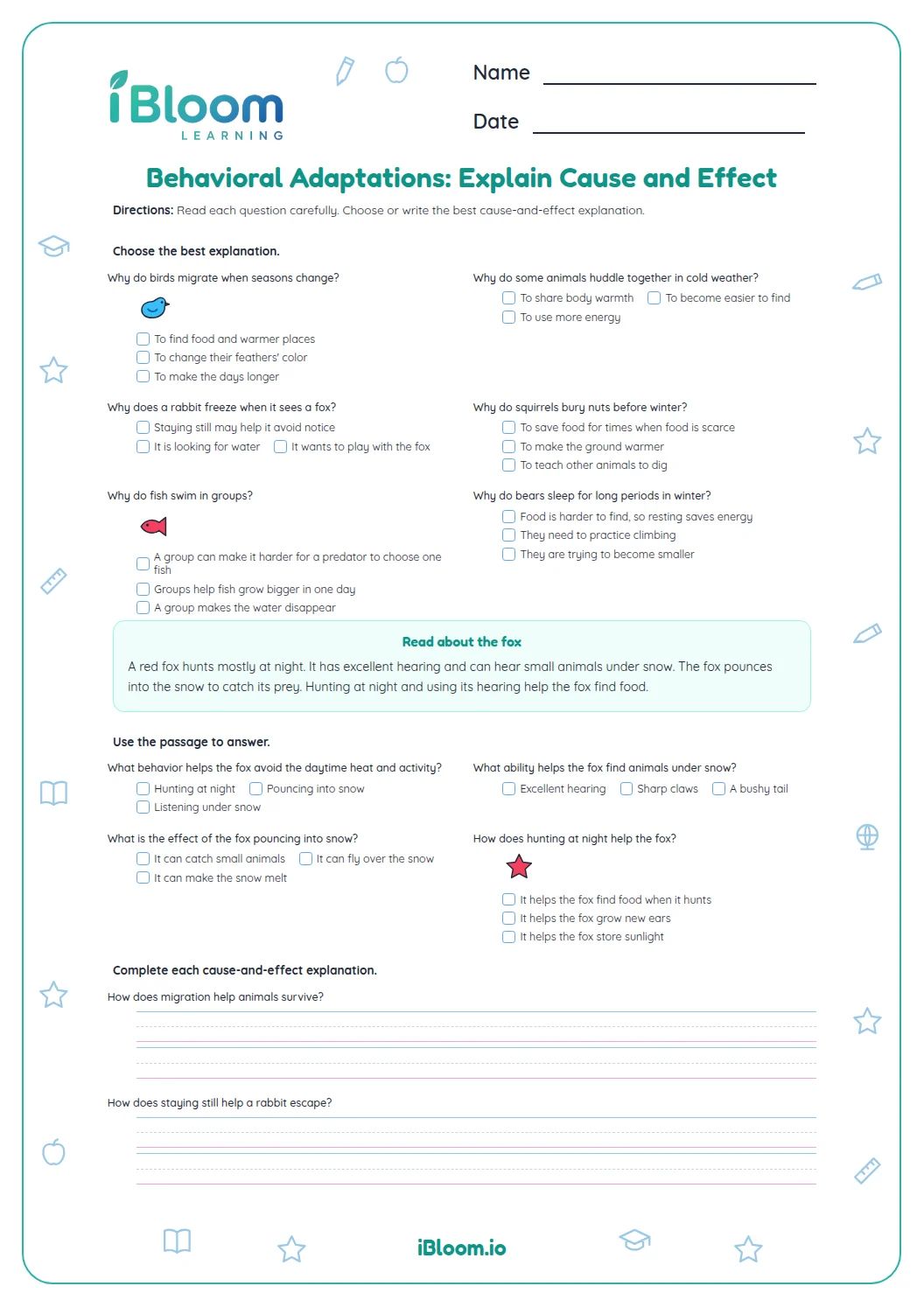
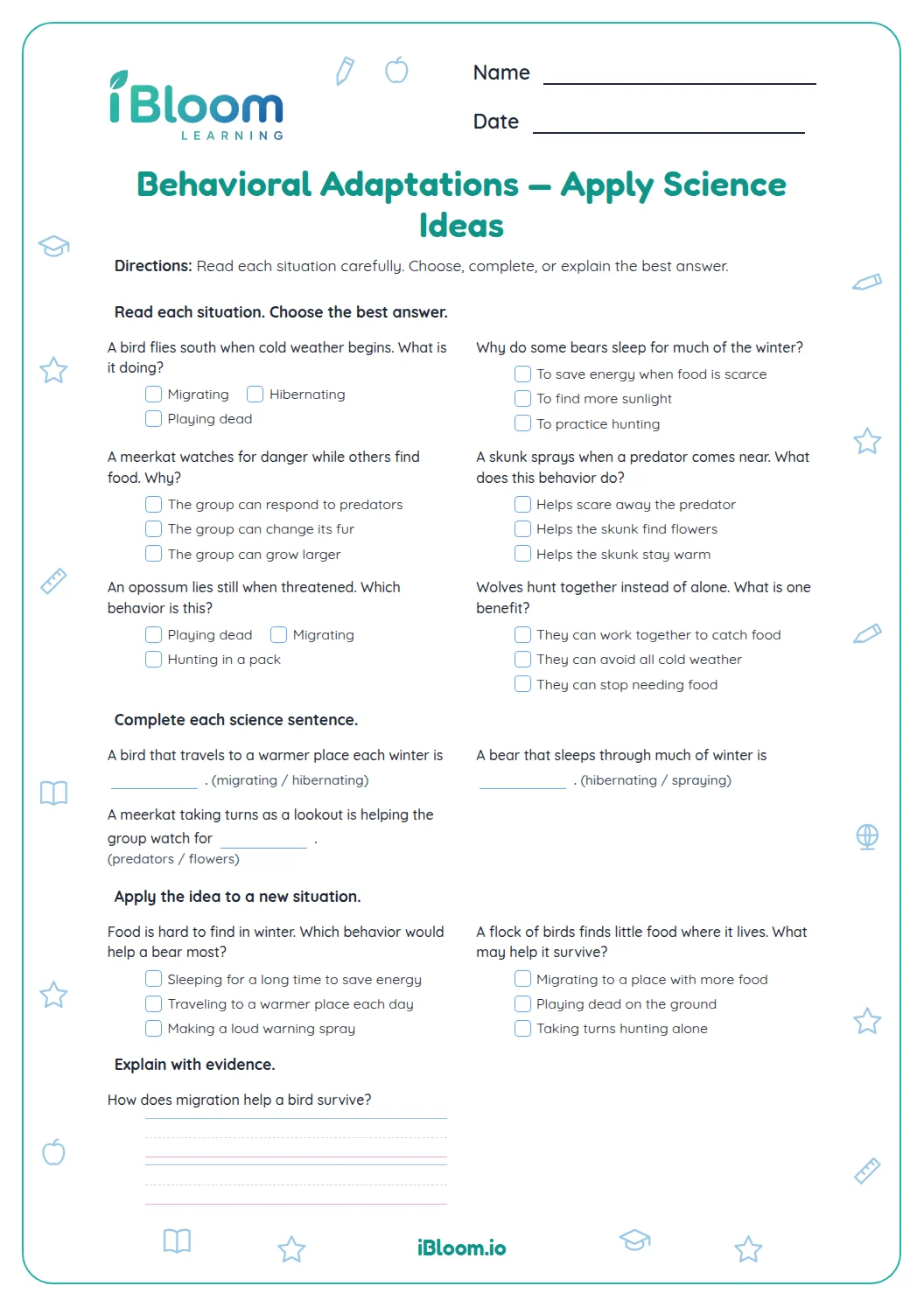
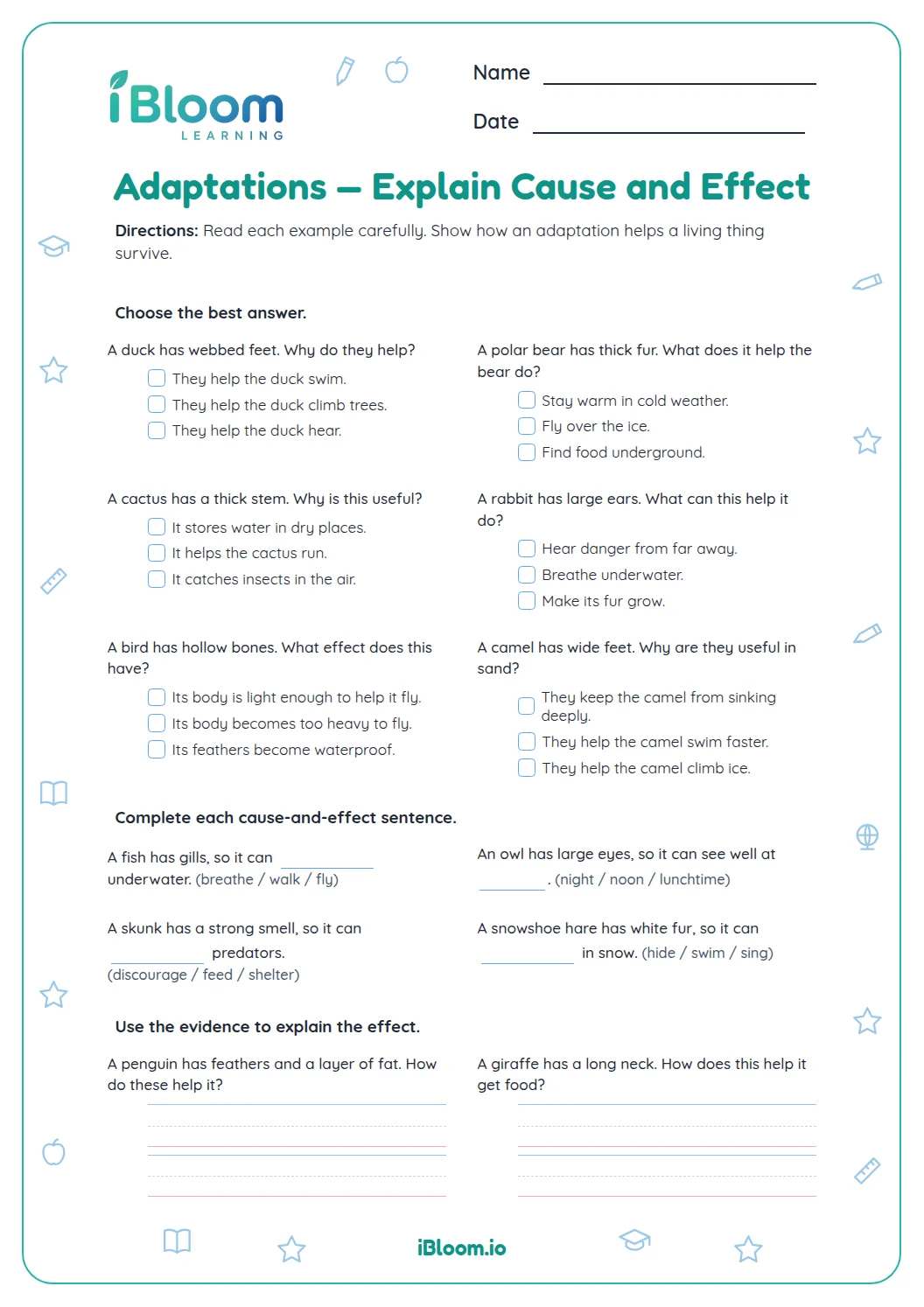
This Grade 3 science printable asks learners to distinguish an animal behavior from a body feature and explain how an action can help an animal meet a need. The 14 questions cover migration, avoiding detection, nest building, finding food, storing food, and staying warm. Three worksheet pages and three answer-key pages are included.
How is a behavior different from a body feature?
A duck’s webbed feet are a body feature. A turtle pulling into its shell is an action. The worksheet asks learners to sort examples by whether they describe an action or a physical trait.
How can behavior help an animal survive?
A squirrel storing nuts can have food available later. A bird gathering twigs can make a place for eggs and chicks. In each case, connect the action to the need it may meet.
Why do animals respond differently to conditions?
A lizard may bask to warm up and hide when the day gets hot. Animals use behaviors that fit the conditions they encounter.
How to work through the page
- 1Read each part’s direction before starting its questions.
- 2Underline or point to the word, number, or detail that supports an answer.
- 3Work through the questions in order and pause to explain a tricky choice.
- 4Use the separate answer key to check responses and revisit any missed clue.
Common mistakes and quick fixes
The mistake
Calling every helpful trait a behavior.
The fix
Check whether the example describes an action or a physical body feature.
The mistake
Naming an action without its benefit.
The fix
Explain how the action relates to food, warmth, shelter, or safety.
The mistake
Treating a possible benefit as guaranteed.
The fix
Use careful language such as “can help” when the outcome depends on conditions.
What to practice next
Questions parents and teachers ask
What is a behavioral adaptation?
It is an action that can help an organism survive in its environment. This worksheet uses animal examples and asks learners to connect each behavior with a possible benefit. The worksheet’s examples and answer key let learners check the reasoning as they work.
How is a behavior different from a body feature?
A duck’s webbed feet are a body feature. A turtle pulling into its shell is an action. The worksheet asks learners to sort examples by whether they describe an action or a physical trait. Rereading the complete example helps keep the answer tied to the evidence on the page.
How can behavior help an animal survive?
A squirrel storing nuts can have food available later. A bird gathering twigs can make a place for eggs and chicks. In each case, connect the action to the need it may meet. Learners can point to the exact clue or step that supports their response.
Why do animals respond differently to conditions?
A lizard may bask to warm up and hide when the day gets hot. Animals use behaviors that fit the conditions they encounter. The answer key provides a concise model for checking this kind of response. The examples connect the action to what the animal may need in that setting.
How many pages and questions are included?
There are 14 questions across three worksheet pages, followed by a three-page answer key. Read the directions at the start of each part, complete the items in order, and compare each response with the matching answer. Written responses include a model answer for checking.